
 Pantry Pests
 Pill Bugs
 Ants
Ants Spiders
 Bees
Bees Crickets
 Miller Moths
 Millipedes
 Wasps
Wasps Hornets
 Mice
Mice Voles
Voles Rats
Rats Bats
Bats Birds
Birds Gophers
 Mosquitos*
 How to Identify Rodent Droppings
 Keep Pests Out of Your Kitchen
 Keep Ants Away
PEST LIBRARY
About Millipedes
The little dark coilers that turn up along the foundation and die on the basement floor. Here is what they actually are, why they arrive in waves, and how to tell them apart from something that bites.
FIELD NOTES
Millipedes by the Numbers
If they are turning up by the dozen, here is what you are actually looking at, and why it is less alarming than it feels.
2
Legs Per Segment
Two pairs of legs on every body segment is the giveaway. A centipede has only one pair per segment.
<100
Despite the Name
The word millipede means thousand feet, but most species carry well under a hundred legs.
1-2 in
Typical Length
Most millipedes around a Colorado home run from half an inch to about two inches long.
1-2 days
Survival Indoors
Indoors is too dry for them. The ones that get inside usually die within a day or two on their own.
TELL THEM APART
Millipede or Centipede?
People mix these two up constantly, and it matters, because one is harmless and the other can deliver a painful, venomous bite. Once you know what to look for, they are easy to tell apart.
HARMLESS
Millipede

Two pairs of legs per segment
Rounded body Slow mover Curls into a coil
A rounded, tube-shaped body that moves slowly and curls into a tight coil when disturbed rather than darting off. Millipedes eat decaying plant matter, do not bite, and at most release a mild defensive fluid. Two pairs of legs on every segment.
CAN BITE
Centipede
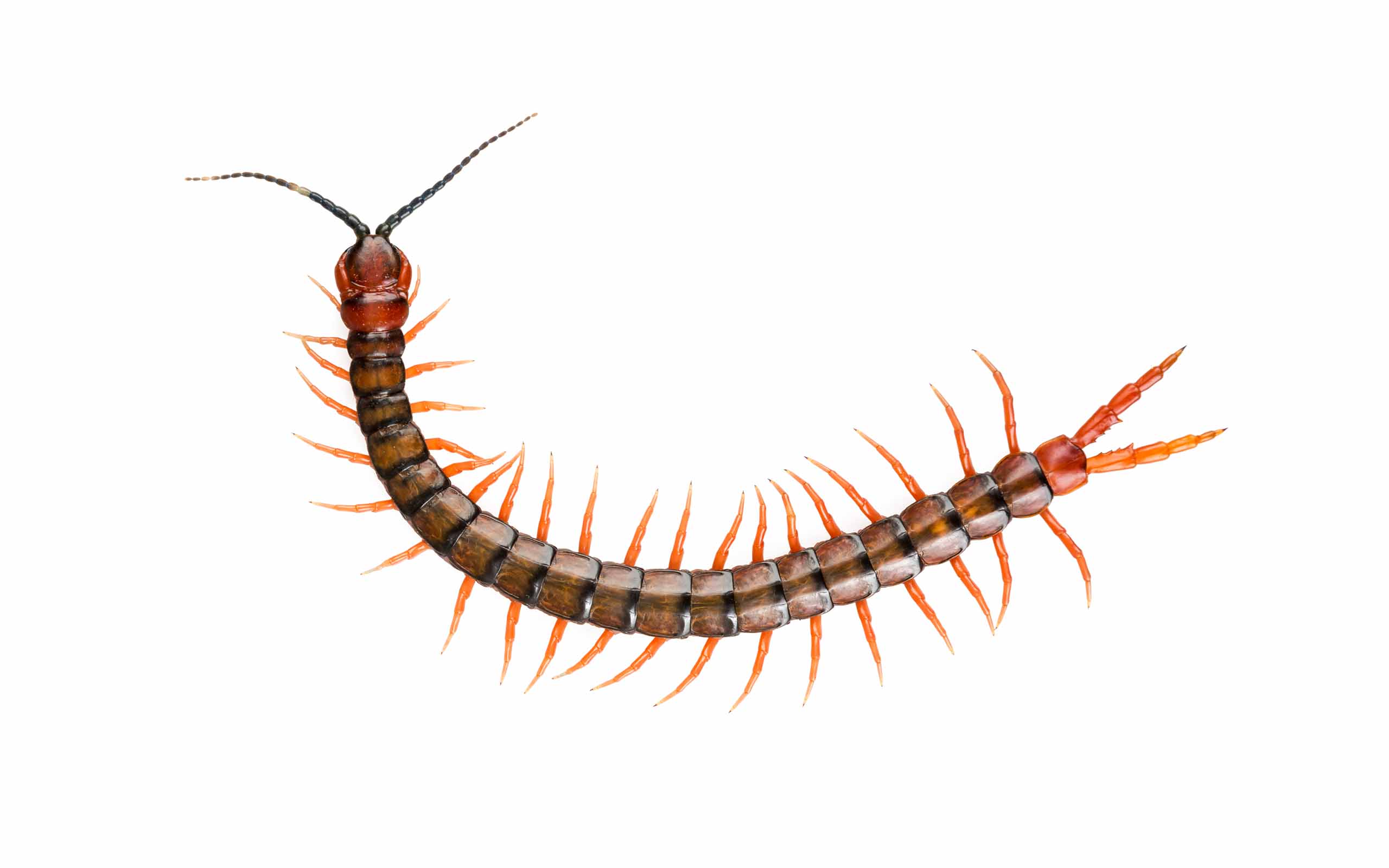
One pair of legs per segment
Flat body Fast mover Venomous bite
A flatter body built for speed that darts away the moment it is uncovered. Centipedes are predators with a venomous bite that, while rarely dangerous, genuinely hurts. One pair of legs per segment, usually longer and more visible than a millipede's.

WHY THEY APPEAR
Why Millipedes Show Up When They Do
Millipedes live outdoors in soil and leaf litter, feeding on decaying plant matter, and they need steady moisture to survive. Most of the year they stay out of sight. They become a problem when the weather pushes them out of their habitat all at once.
A heavy rain that floods the soil drives them up and out. A dry spell does the same in reverse, sending them searching for moisture. Either way they move in numbers, and a house in the path is where they end up. These are the conditions around a home that pull them to the foundation.
Damp Mulch Beds
Mulch banked against the foundation holds moisture and gives millipedes a cool, damp place to gather right beside the house.
Overwatered Landscaping
Sprinklers running too long keep the soil saturated. Wet ground at the foundation is exactly the habitat they want.
Leaf Litter and Debris
Piles of leaves, grass clippings, and yard debris stay damp underneath and feed the decaying matter millipedes live on.
Window Wells
Basement window wells collect leaves and water and become a trap that funnels millipedes to a below-grade entry point.
PEST THREAT LEVEL
2/10
LOW
More Nuisance Than Threat
Millipedes do not bite, do not sting, and carry no disease. They cannot chew wood or fabric, and they do no damage to your home or your belongings. The trouble is almost entirely about numbers and nerves: finding dozens of them, alive or dead, is unsettling even though not one can hurt you.
The one caveat is the defensive fluid some species release when handled or threatened. It can stain a surface and may irritate skin or eyes, so it is worth sweeping or vacuuming them up rather than crushing them by hand. Otherwise the ones that get indoors dry out and die within a day or two on their own.
No Bite or Sting
Harmless to people and pets
No Disease
Not a vector for illness
No Property Damage
Cannot harm your home
Mild Defensive Fluid
Sweep them up, do not squash
FREQUENTLY ASKED
Common Millipede Questions
The same questions come up every time millipedes start showing up in numbers. Straight answers.
Are millipedes dangerous?
No. They do not bite or sting and they carry no disease. A few species release a mild defensive fluid that can irritate skin or stain a surface, which is the only reason to avoid handling them with bare hands.
Why are there suddenly so many?
Millipedes migrate when the weather shifts. Heavy rain floods them out of the soil and a dry stretch drives them searching for moisture, so they move in waves, often straight toward foundations. The surge usually passes in a week or two.
Will they breed or survive inside?
No. Indoor air is far too dry for them. The ones that get in typically die within a day or two, which is why you usually find them dead on a floor rather than living and multiplying.
How are they getting into my house?
Through gaps under doors, weep holes, foundation cracks, and basement window wells. During a migration even small openings let them through in numbers, so sealing entry points matters more than anything you spray.
How do I tell a millipede from a centipede?
Count the legs per segment if you can get close. Millipedes have two pairs per segment, a rounded body, move slowly, and curl up when disturbed. Centipedes have one pair, a flatter body, move fast, and can bite. The millipede is the harmless one.
Dealing With a Millipede Invasion?
Knowing why millipedes are showing up, and where they are getting in, is the difference between fighting them every season and breaking the cycle. The work is drying out and sealing the band around the house where they cross, not fogging the yard.
We have served Castle Rock, Parker, and Douglas County for over 13 years. We find the moisture and the entry points, treat the band where they cross, and keep the perimeter sealed.
Call 720-583-4126 or contact us online to get started.
More Pest Protection.
More Peace of Mind.