
Pro Tips / Vole Season
Vole Holes in Your Yard: What They Mean Before Winter
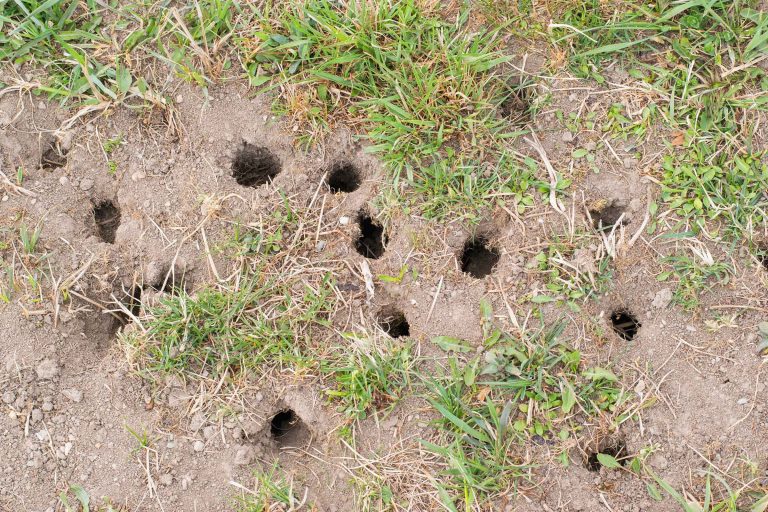
You walked the lawn and found holes. Small ones (dime to quarter sized) punched into the turf with no dirt piled around them. Between the holes are narrow trails of grass worn to bare soil, running along a flower bed or out toward the fence.
The October Problem
That is a vole problem, not a gopher problem. And October is when it matters most, because everything voles do between now and spring happens under snow, where you cannot see it. Here is how to tell what you are looking at, what it costs you, and what still works this late in the year.
Surface or Underground
Vole Holes vs. Gopher Mounds: Telling Them Apart
One distinction resolves almost every case: voles work on the surface, pocket gophers work underground. Everything else follows from it.
Quick version:
Vole Holes
Voles leave open holes about the diameter of a dime to a quarter, with no mound of soil around the entrance, connected by surface runways, trails one to two inches wide where the grass is clipped short and the ground worn bare. Runways follow cover: fence lines, sidewalk edges, the base of a retaining wall, the mulch ring around a tree. Pull back a mat of dead grass in a neglected corner and you will often find a network under it.
Gopher Mounds
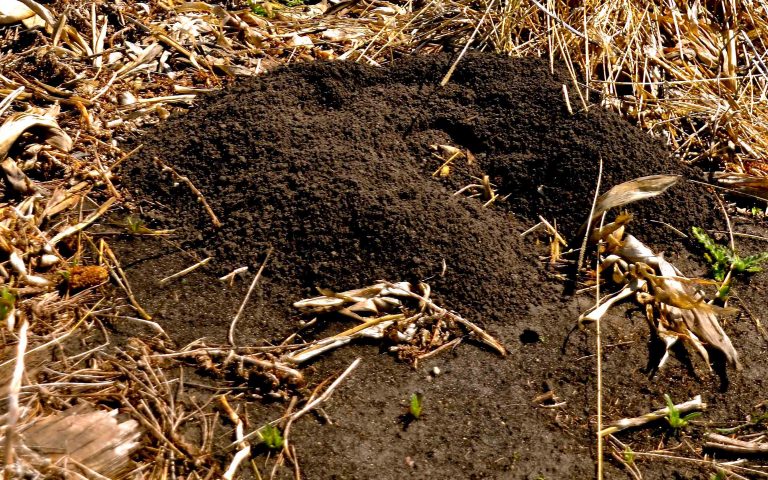
Pocket gophers leave mounds: a fan or crescent of loose soil, sometimes a foot across, with the entry hole plugged off to one side. No open hole and no runways, because a gopher never surfaces to travel. What you get is fresh dirt overnight in a new spot every few days, and a single active gopher can push out 70 or more mounds in a year. If mounds are what you have, read how to identify gopher damage next. The control approach is completely different, and the differences between gophers and voles covers both animals side by side.
Voles get confused with mice too. Mice head for buildings; voles stay in the landscape. Full comparison in voles vs. mice, and where both sit among the different types of rodents around Douglas County.
Fall Vole Pressure
Why Vole Activity Spikes in the Fall
Nothing about voles changes in October. What changes is your lawn.

Dormant Turf
Green grass is a vole's whole diet through summer. As the turf goes dormant and the perennials die back, that food disappears, and voles do not hibernate. So through fall they do three things: expand the runway system, dig more surface holes, and shift from green growth to bark, roots, and bulbs.

Several Litters a Year
Voles also breed hard: several litters a year. A yard that held two voles last October can show a full runway network this one.

The Snowpack
Then it snows. A few inches gives voles an insulated, hidden space between the snowpack and the soil. They travel it freely, in daylight, with no exposure to hawks, foxes, or your dog, and they keep feeding all winter. You see none of it until the melt in March, when the damage is done.

The Working Month
That is why October is the working month. Once there is snow on the ground, most of what reduces vole pressure is out of reach until spring.
Risk to People and Pets
Are Voles Dangerous?
Not to you. Voles are not aggressive. They avoid people and flee rather than confront, and bites are rare, usually someone picking one up, or a pet catching one. The risk is to your property, not your person, and it can be expensive.
One secondary health note, stated plainly: like other wild rodents, voles carry fleas and ticks, and a population along a fence line is a reservoir for both in the part of the yard your dog uses most. That is a reason to deal with the runways. It is not a reason to panic.
The damage is the real story, and one item costs Front Range homeowners more than the rest combined.

Vole damage happens under the snow, where you cannot see it.
Tree and Shrub Damage
Girdling: The Damage You Find in the Spring
Through winter, voles gnaw bark off the base of young trees and shrubs. Strip a complete ring around the trunk and you sever the tissue moving water and nutrients between roots and canopy. That is girdling, and a girdled tree does not recover. It leafs out weakly in spring, or not at all, and it has to come out.
The snow line is the part that catches people. Voles work at whatever height the snowpack lets them reach, so the chewing often sits several inches to a foot up the trunk, above where you look, below where the snow was. You do not find it in January. You find it in April, on an aspen you planted three years ago.
The gnawing is identifiable: irregular patches of narrow grooves about an eighth of an inch wide, at odd angles, close to the ground. Rabbit damage is a clean 45-degree cut, higher up the plant. Young aspens, crabapples, fruit trees, and newly planted ornamentals are most vulnerable: anything with thin bark and a small trunk.
The Spring Repair Bill
What Vole Damage Costs a Colorado Landscape


Turf. Runways show up as brown, matted trails once the snow melts. Light damage fills in on its own. Heavy networks need reseeding or sod patches, in the same spring weeks you had other plans for.

Trees and shrubs. The expensive one. A girdled aspen or crabapple is a removal, a replacement, and planting labor, and you lose the years of growth that tree already had. A nursery sapling is not a like-for-like swap.

Perennial beds and bulbs. Voles feed on roots, crowns, and bulbs through winter. Tulips, crocus, hostas, and ornamental grasses come up thin or not at all, with no visible cause above ground.

Irrigation. Digging and gnawing around emitters, drip line, and shallow laterals shows up as leaks and dead zones when the system is charged in April.
Fall Yard Checklist
How to Reduce Voles Before the First Snow
You cannot make a property permanently vole-free. Douglas County open space is full of voles and they keep arriving at the edges. What you can do is take away the cover and food that let them build a population in your landscape, and protect the plants that cost the most to replace. That is what reducing vole pressure means. Do this while the ground is still workable:
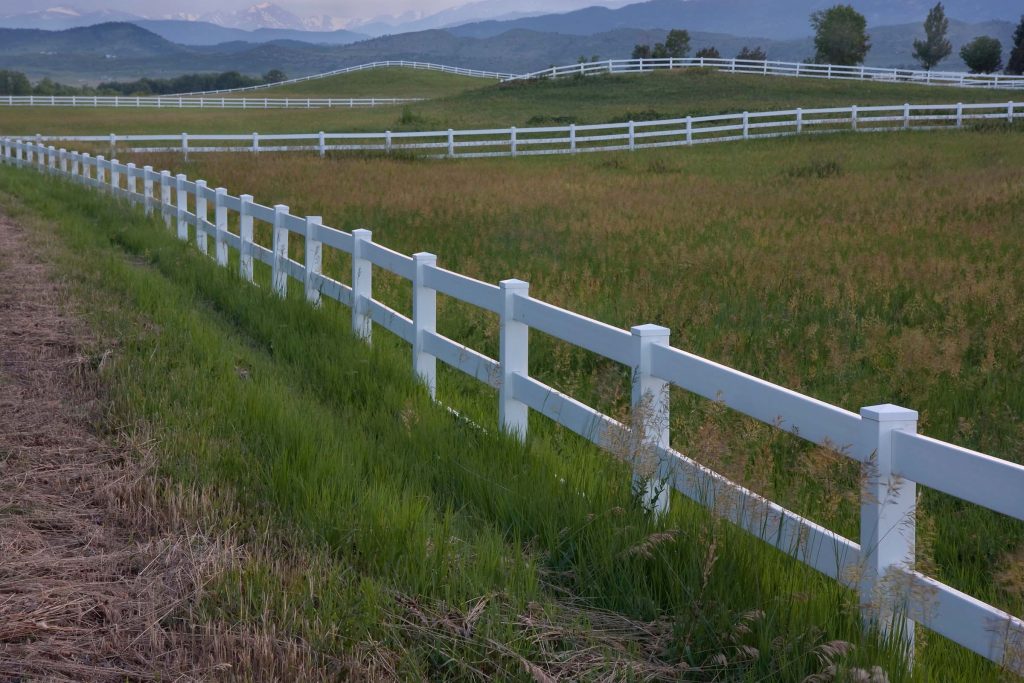
- Cut the lawn short going into dormancy, and rake up the mat. Take the last mow or two below your summer height. Long dormant grass that mats down under snow is exactly the cover voles want, and so are the leaf piles and old thatch along fences and bed edges.
- Pull mulch back from trunks. Mulch piled against a trunk is a vole nest with the food source in the middle of it. Pull it back six inches to a foot so the root flare shows.
- Guard the young trees. Wrap trunks with quarter-inch hardware cloth cylinders or commercial trunk guards. Set the guard an inch or two into the soil, run it high enough to clear your normal snow depth (18 to 24 inches above grade is a reasonable target here), and leave it loose enough not to bind the trunk.
- Thin the dense plantings near the house and beds. Heavy ground cover, low junipers, and unmanaged ornamental grass against a foundation give voles protected travel. Our guide to landscaping for a pest-free yard goes further on this.
- Mow a buffer strip. Where turf meets open space, a mowed band makes the crossing exposed, and voles avoid open ground.
- Get the runways treated before snow. Once a network is established, clearing cover rarely brings the population down far enough on its own. That is the part that needs vole control: locating active runways and treating them directly, which is far easier on bare ground than under six inches of snow.
Greenbelt Edges
Voles in Douglas County Landscapes
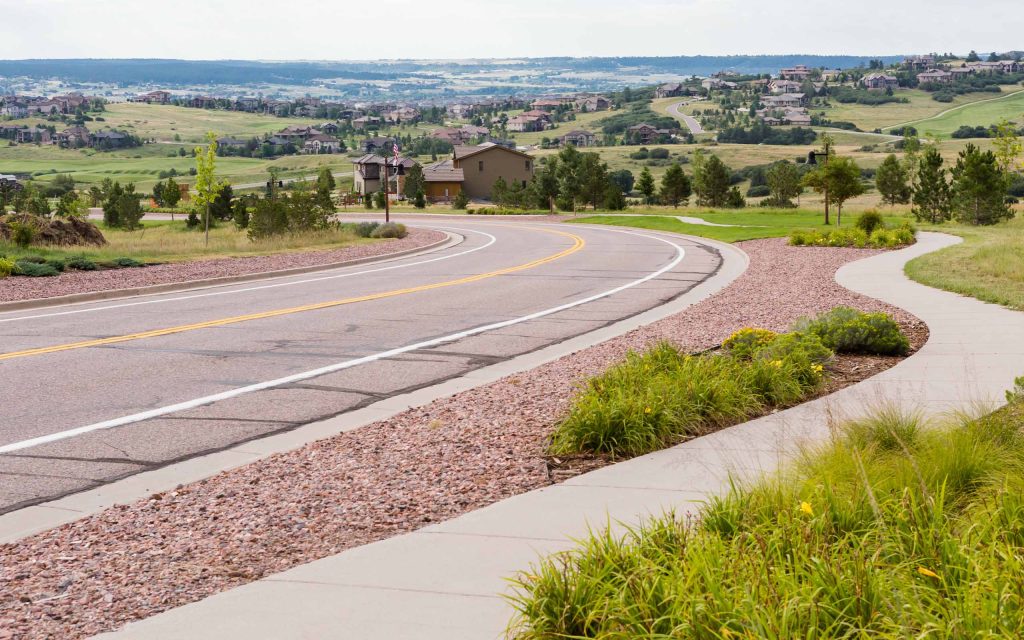
Open-space edges are vole highways. Douglas County built a lot of neighborhoods against greenbelts, drainage corridors, and native-grass buffers, and those corridors hold voles year-round no matter what any single homeowner does.
The pattern shows up most on greenbelt-adjacent lots in The Meadows and Founders Village in Castle Rock, and Stonegate and The Pinery in Parker. If your back fence line is trail, detention pond, or unmowed native grass, expect pressure every fall, concentrated in the first twenty feet of lawn inside that fence.
Two other local factors: irrigated turf beside dry native grass is a food island as the season dries out, and these builds are recent, so thin-barked aspens and ornamentals are everywhere in the size class voles girdle.
Interior lots are not exempt, but the yards that lose trees are usually on the edge. Treat the fence line as the front line. We work these neighborhoods as part of Castle Rock pest control and ongoing pest control for your yard.
Are Voles Dangerous to People or Pets?
Voles are not aggressive and bites are rare. The practical risk is property damage: turf, roots, bulbs, irrigation, and especially the bark of young trees. Voles also carry fleas and ticks, so a population along a fence line is a reservoir for both.
What Do Vole Holes Look Like?
Open holes about the diameter of a dime to a quarter, with no mound of soil around them, connected by narrow trails of clipped grass worn to bare ground. A fan-shaped pile of fresh dirt with a plugged hole is a pocket gopher, not a vole.
Do Voles Come Out in Winter?
Yes. Voles do not hibernate. Once snow covers the ground they travel and feed in the sheltered space between the snowpack and the soil, protected from predators. That is when most damage happens, and why the work has to be done before the first snowfall.
Will Voles Kill My Trees?
They can. A complete chewed ring of bark around a trunk girdles the tree, and a girdled tree usually does not recover. Young aspens, crabapples, fruit trees, and recent ornamentals are most vulnerable, because their bark is thin. Trunk guards installed in fall are the most effective thing a homeowner can do about it.
How Do I Tell Voles From Mice?
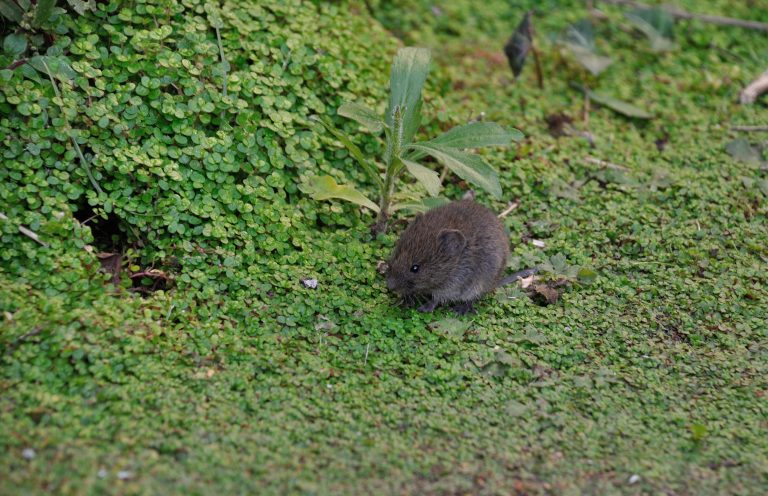
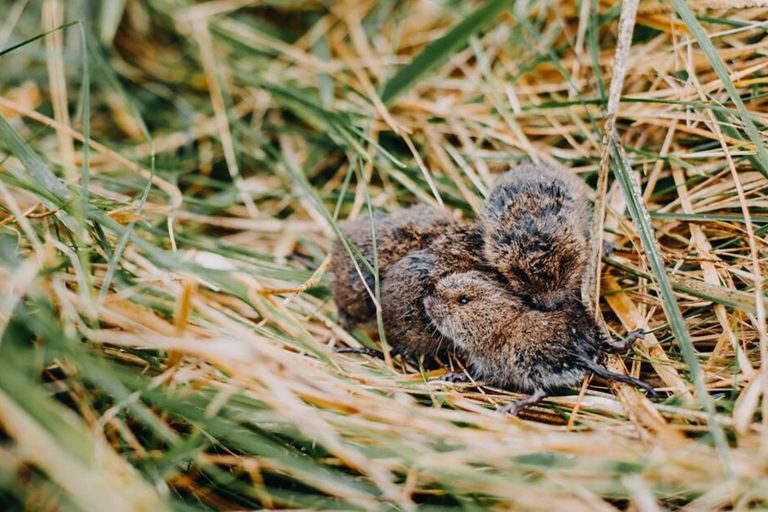
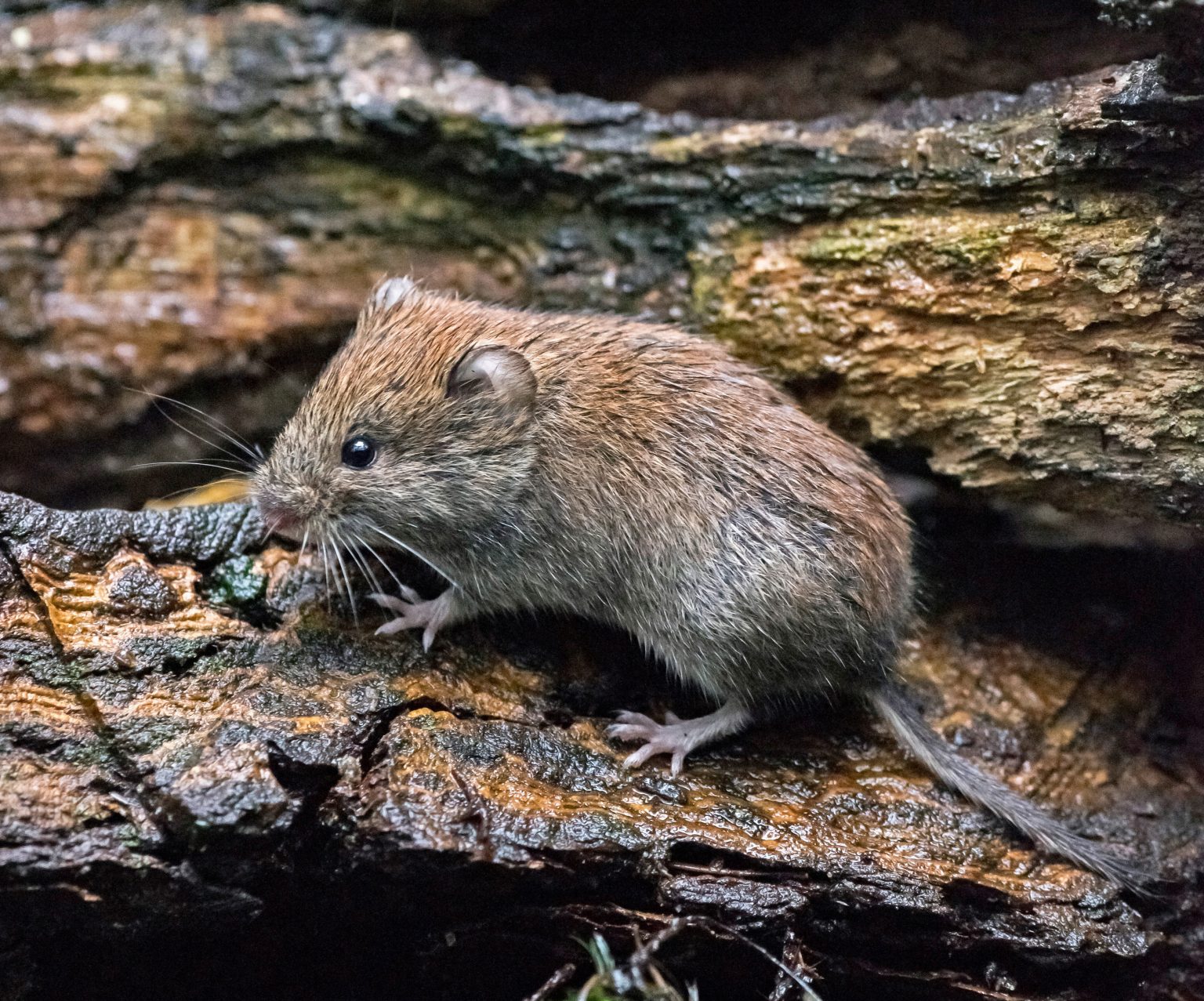
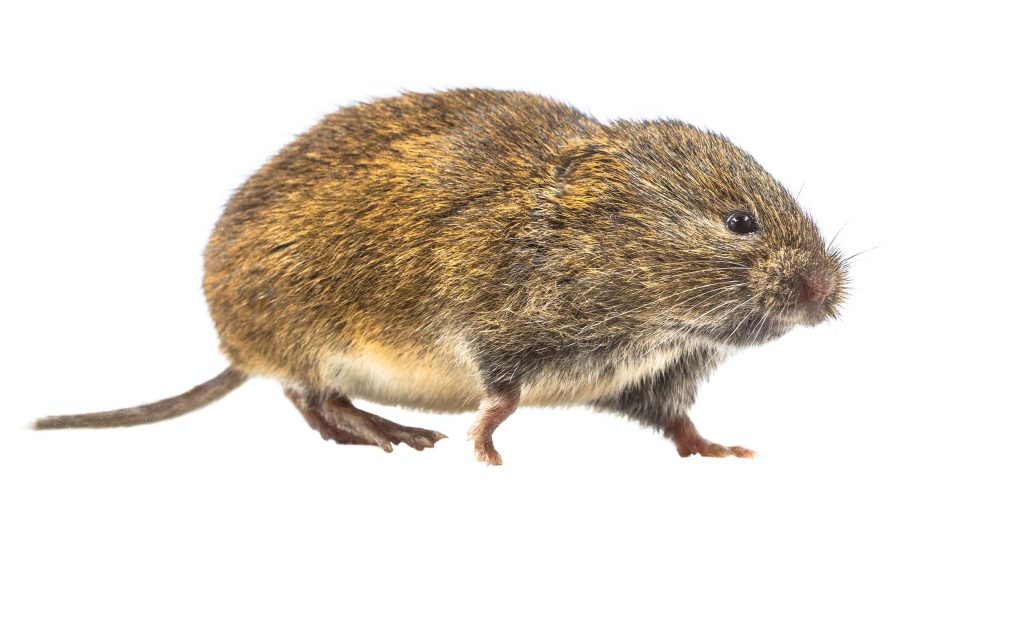
A vole is stocky, with a blunt nose, small ears close to the head, and a tail shorter than its body. A house mouse has a pointed nose, large ears, and a tail as long as its body. Behavior separates them faster than looks: voles stay in the landscape, mice head for structures. We compare the two side by side in voles vs. mice.
Get Started
Vole Control From OMNIS
Vole damage happens under the snow, where you cannot see it. The time to deal with runways is before the first real snowfall. Once the ground is frozen and covered, most of what works is out of reach until spring, and by then the trees are either girdled or they are not.
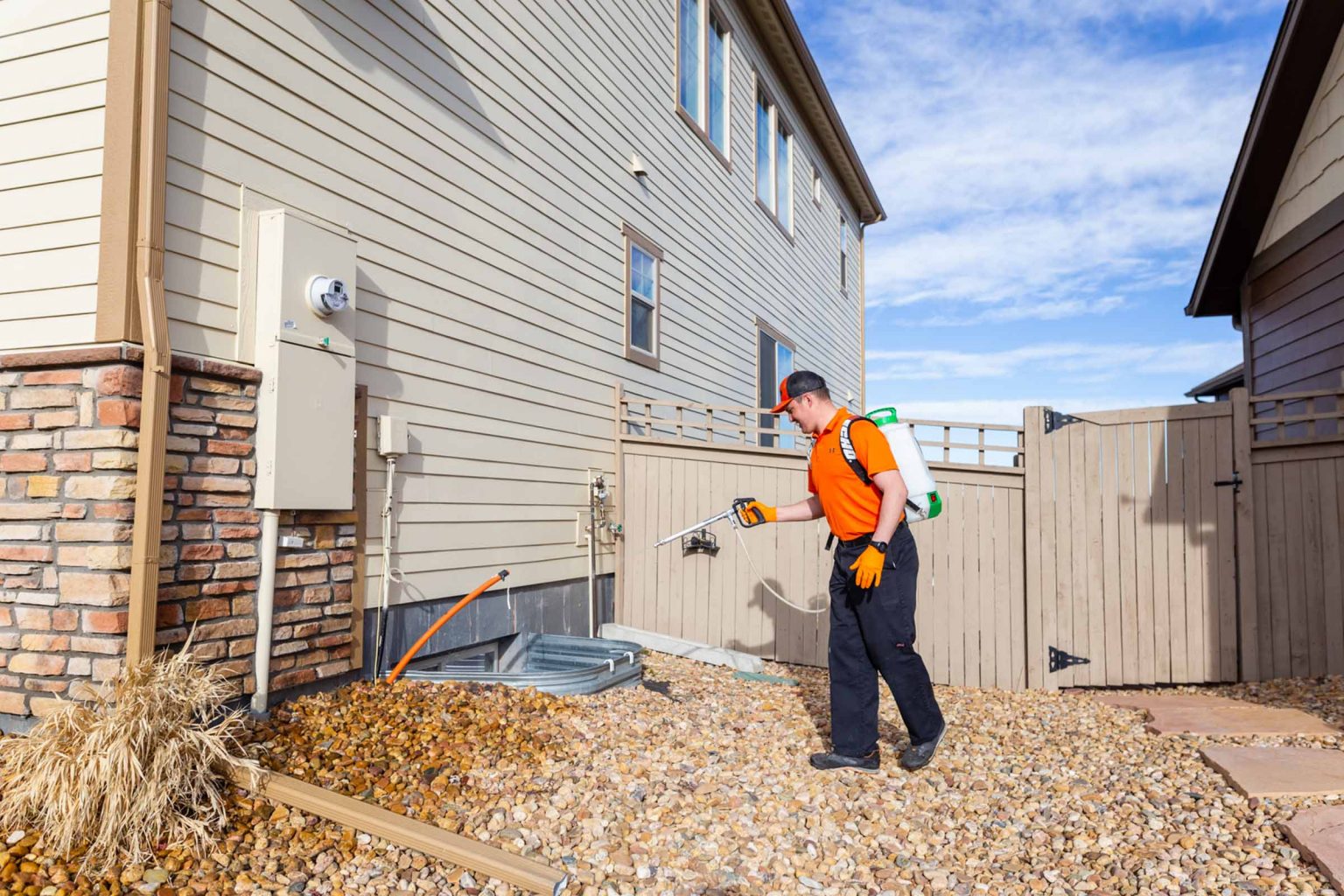
If you are seeing holes and runways now, have it looked at while there is still time to act. An OMNIS technician will walk the property, confirm whether you have voles or a tunneling rodent, map the active runways, and lay out what brings the pressure down before winter.
Call OMNIS Pest Control at 720-583-4126 to schedule a vole inspection, or request one online. We serve Castle Rock, Parker, Castle Pines, Lone Tree, Highlands Ranch, Larkspur, Monument, and the Denver metro.
Vole Help Before Winter
Questions? Talk to OMNIS Pest Control
We would rather answer a question now than fix a problem later.