
Pro Tips / Mouse Exclusion
How to Keep Mice Out of Your House: A Colorado Homeowner's Exclusion Guide
Maybe you saw one mouse in the garage last week. Maybe you have not seen anything yet and you just know what October does along the Front Range. Either way the job is the same, and it is not trapping. It is closing holes.
The Quarter-Inch Rule
A house mouse fits through a gap about 1/4 inch wide, the width of a pencil.
If a pencil goes in, a mouse goes in, and no amount of trapping inside changes that.
This guide goes room by room, then covers what to seal with.
Front Range Timing
Why October Is When Mice Get In
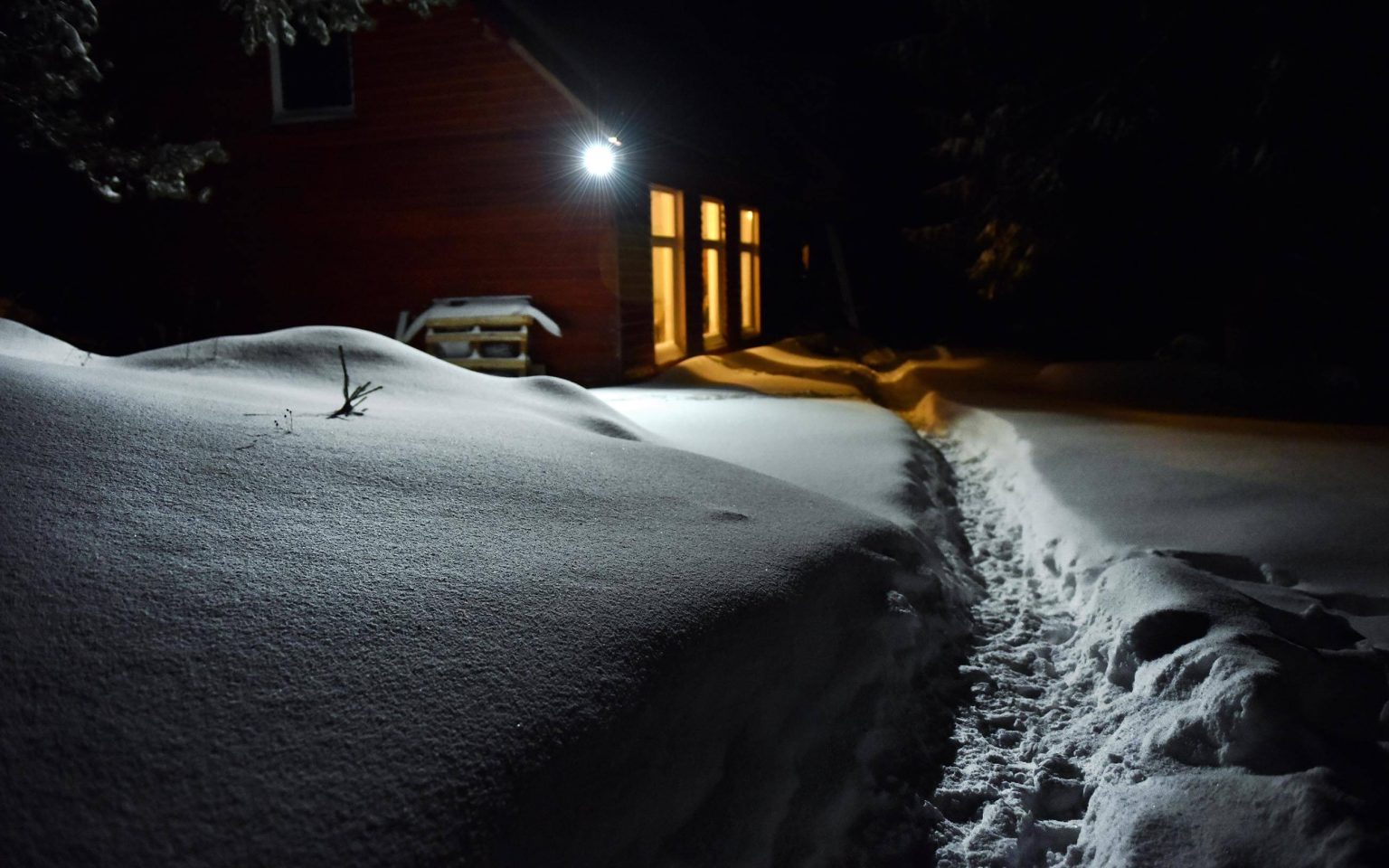
The first hard freeze along the Front Range usually arrives between late September and mid-October, earlier at Castle Rock and Monument elevations than down in Denver. Mice do not hibernate. When the nights drop and the seed heads and insects run out, house mice and deer mice move toward heat, and a heated house is the largest heat source on the block.
They do not decide to move in. They follow a warm draft to its source and take the first gap they find. That is why fall pest control belongs on the calendar before the freeze, not after the scratching starts.
Entry Points
How Mice Actually Get Into a House
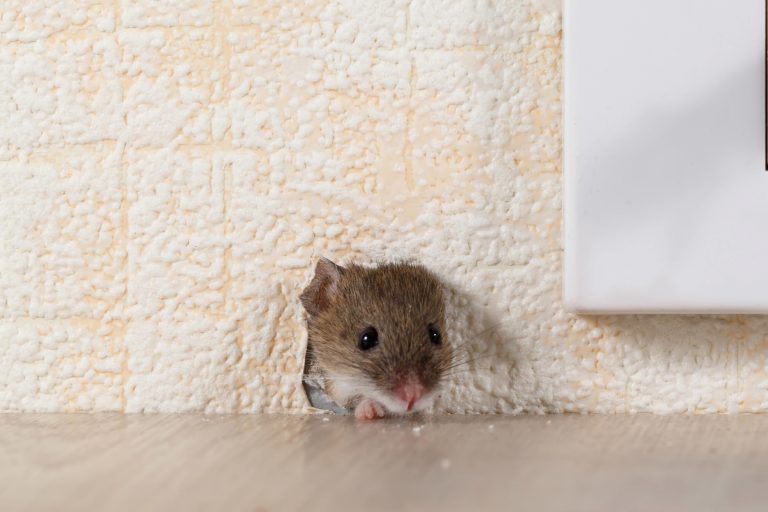
A quarter inch is enough. The skull is the limiting dimension. If a mouse gets its head through, the body follows. A gap you would not think twice about (under a garage door, around a gas line, at a soffit corner) is a door.
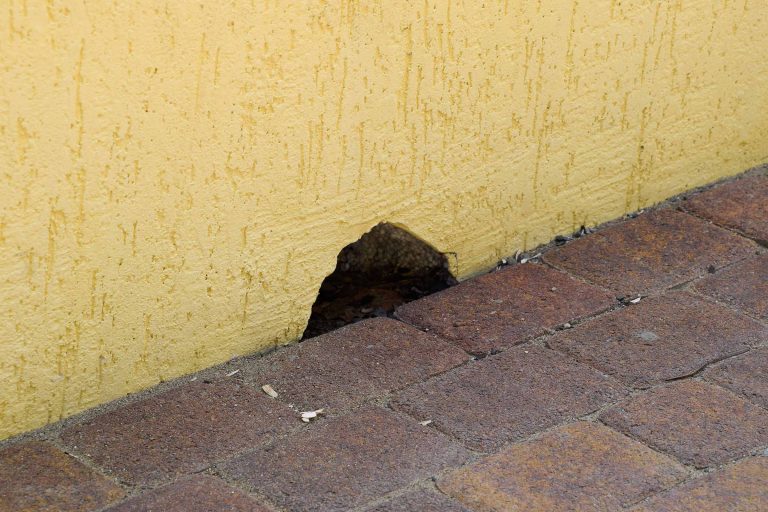
They gnaw a small gap into a bigger one. Mice will widen anything soft: foam, weatherstripping, caulk, wood trim, crumbling mortar, plastic vent louvers, hardboard siding swollen at a butt joint. What stops them is material they cannot get a tooth into: galvanized metal, masonry, tight wire mesh.
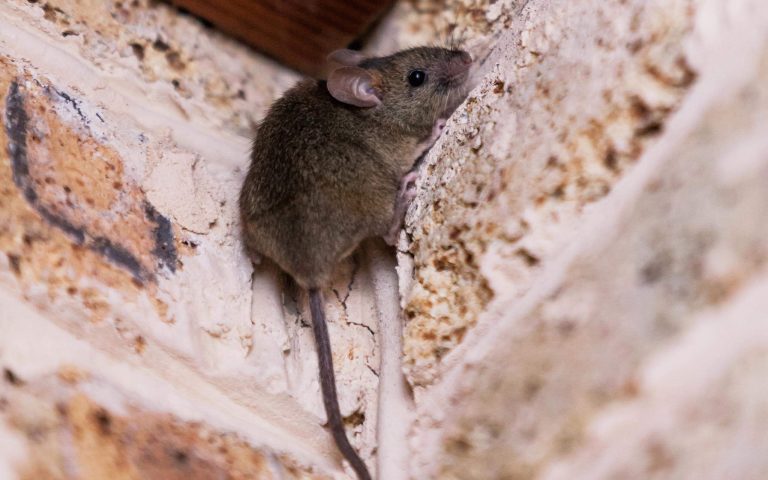
They climb, and they follow edges. Brick, stucco, rough cedar, downspouts and gas risers are all climbable, so a gap where a second-story soffit meets the wall is as reachable as one at the foundation. Mice navigate by touch along walls and foundations, which is why utility penetrations are the classic entry: a pipe is a highway ending in a hole somebody drilled and never sealed.

Garage First
A Room-by-Room Exclusion Walkthrough
Do this with a bright flashlight at dusk. Have someone shine a light from the far side of a wall while you look; light gets through the same gaps mice do. Watch for greasy smudges along baseboards and foundation edges, body oil from a route in use.
Garage
Start here: in most Front Range homes the garage is the first room mice occupy, and often the only one they need.
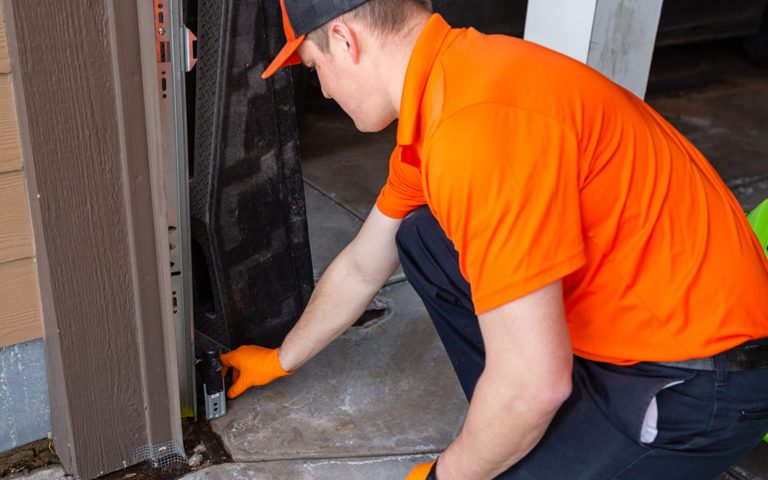
The bottom seal on the overhead door is the most common failure. It is a T-shaped vinyl strip in a retainer track along the bottom panel, and here it takes a beating: high-altitude UV, forty-degree swings between afternoon and midnight, road grit ground into it all winter. It hardens, cracks and takes a permanent set. Close the door on a sunny day, stand inside and look along the bottom. Any daylight is an open door. Replacement seal comes in a roll and slides into the existing track.
Then look at the two bottom corners where the seal meets the jamb. The seal compresses across the middle and leaves a triangular gap at each end that never closes. Vinyl stop molding along the jamb, run down to the concrete, fixes it. If the slab has heaved, add a threshold seal bonded to the concrete so the door has something flat to land on.
Check the service door sweep. Then look at what you store out there: cardboard stacked against a wall is nesting material and cover in one package, and pet food and birdseed belong in metal cans. More on mice in the garage.

Basement and Crawl Space
The rim joist (the band of framing where the floor sits on the foundation) is the biggest opportunity in an unfinished basement. Check every joist pocket and the seam where the sill plate meets concrete, then pack copper mesh into the gaps and foam over it.
Then the sump pit lid and the radon mitigation pipe where it passes through the slab or rim; retrofits are often cored with a hole saw and sealed loosely or not at all. Window wells collect mice; one that drops in works the window frame next. Floor drains need a wet trap or a trap-seal insert. In a crawl space, screen the vents from the inside with 1/4-inch hardware cloth (insect screen will not hold), and weatherstrip the access hatch.
Kitchen and Laundry
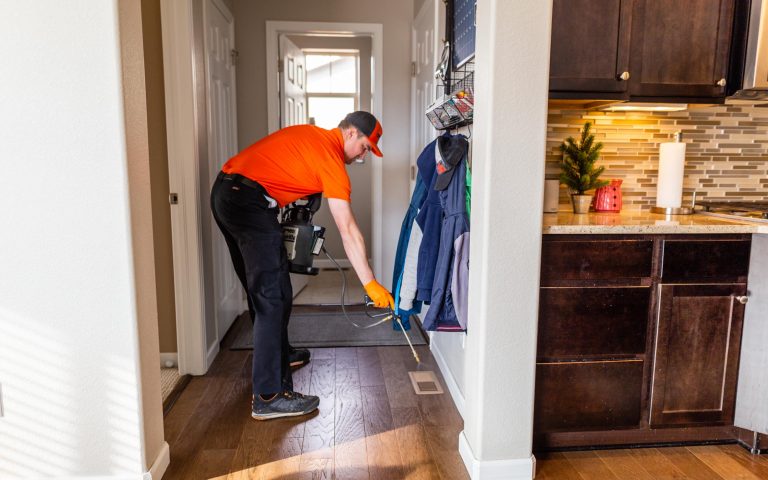
Mice in the walls reach living space through plumbing chases. Open the cabinet under the kitchen sink and look at the back wall where the drain and supply lines pass through. That hole is usually oversized and open into the wall cavity, and the same goes for the dishwasher and the refrigerator's ice-maker line. Pack copper mesh tight around the pipe, then cover with an escutcheon plate or foam.
The dryer vent is the one people miss. Exterior dampers stick open or lose a flap, and a four-inch duct with no working damper is a hallway. Replace the hood with one that has an intact damper and a coarse rodent guard. Do not screen it with fine mesh. That packs with lint and becomes a fire problem.
Attic and Roofline
Most attic mice do not arrive from above. They come in low and climb the wall cavities, so sealing the bottom of the house cuts off the attic.
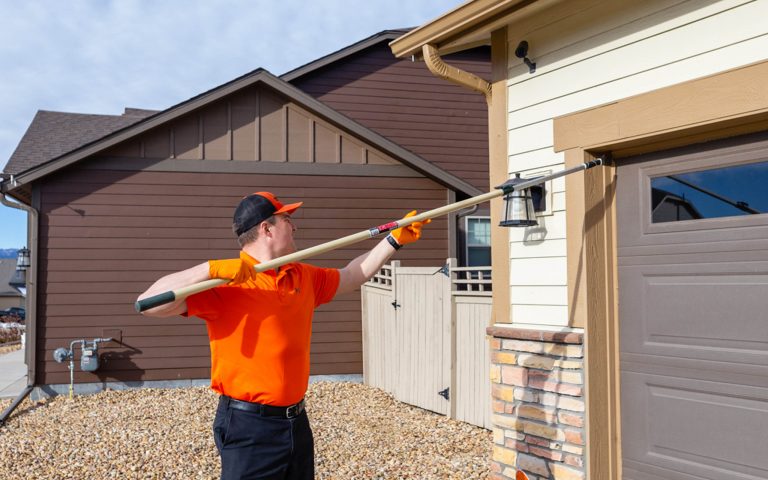
Direct roofline entries still exist. Look where the soffit meets the fascia and where a soffit return dies into a wall. On the complex rooflines common in Castle Rock and Parker, a lower roof meeting an upper wall almost always leaves an opening. Aluminum soffit panels pull loose in wind, and gable and box vents need 1/4-inch hardware cloth on the inside face. Screen these rather than closing them; attic ventilation has to keep working.
Exterior
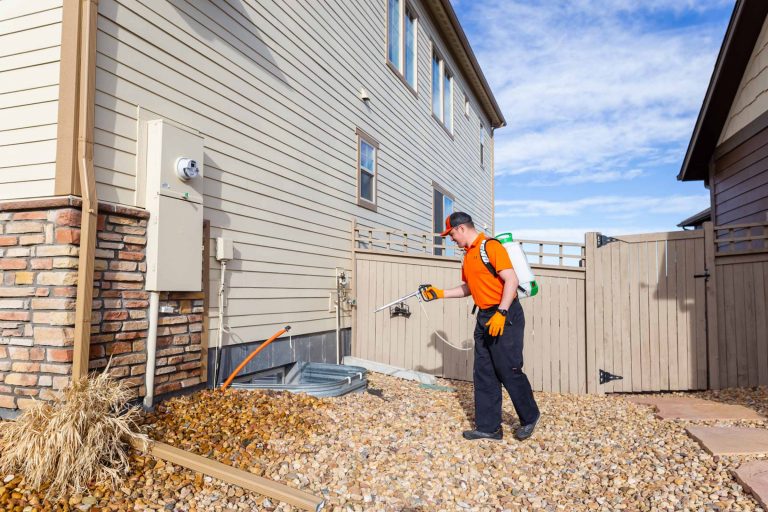
Weep gaps in brick veneer are the ones to get right. Those small open joints in the bottom course are drainage, and caulking them traps water in the wall. Use stainless steel weep-hole covers or copper mesh inserts instead.
Then: the gas meter riser, the air conditioner line set, electrical conduit, hose bibs, and any cable line drilled through years ago and never sealed. Check the gap between the deck ledger board and the siding.
Finally, cut back what touches the house. Juniper against the foundation, firewood on the wall and a bird feeder by the back door are what put mice there in the first place.
Exclusion Materials
What to Seal With (and What Mice Chew Straight Through)


Copper mesh: knitted copper wool. Pack it tight into irregular gaps around pipes and into rim joist pockets. It does not rust, so the seal you make in October is the same seal in five years.

Steel wool: this is the difference that matters. Steel wool rusts. In a damp rim joist or crawl space it can break down in a season or two, and it stains brick and stucco as it corrodes. The hole you plugged reopens and you never see it happen. Use copper.

Hardware cloth: 1/4-inch mesh, 19-gauge galvanized, for vents, crawl space openings and anything larger than a fist. Not window screen. Not chicken wire, whose one-inch openings a mouse walks through without touching the sides. Cut it two inches oversize with tin snips and fasten with screws and fender washers, or masonry anchors on concrete.

Sheet metal: 26-gauge galvanized flashing over any chewable edge: the bottom of a wood door, a gnawed soffit corner, a rotted siding butt joint. Mortar or hydraulic cement for foundation cracks, block voids and gaps at the sill.

Expanding foam: only as a backer or weather seal behind or over mesh. Mice chew cured foam easily, and foam alone is a two-month fix at best. Caulk is fine on rigid material for gaps well under a quarter inch, but on anything a mouse wants, caulk alone fails.
Common Shortcuts
What Doesn't Work
Ultrasonic repellers. Sound at that frequency does not travel through walls or furniture, and mice living with it habituate. No consistent evidence they work. More on our page about ultrasonic mouse repellents.
Peppermint oil, vinegar and dryer sheets. A strong smell can move a mouse a few feet for a few days. It does not close a quarter-inch gap. See does vinegar repel mice and the limits of natural mouse repellents.
One trap, once. Catching a mouse tells you a hole exists, but the open gap resupplies the house faster than one trap empties it.


Warning Signs
Signs Mice Are Already Inside
If you find any of this, you are past prevention.

- Droppings the size and shape of a rice grain with pointed ends, along baseboards or under the sink
- Dark greasy rub marks along a route they run nightly
- Scratching or scurrying in a wall or ceiling after dark
- Shredded paper, insulation or dryer lint in a corner, what a mouse nest looks like
- A musky, ammonia-like smell in a closed pantry, or a pet fixed on one spot of wall
Exclusion still matters, but it is no longer the whole job. Start with mice already in your walls, then when to call an exterminator for mice.
Local Conditions
Colorado-Specific Problems: Deer Mice, Elevation, and Older Front Range Housing Stock

Deer mice. On properties backing to open space or sitting in the foothills (Larkspur, Perry Park, west Castle Rock, Roxborough), the mouse at your foundation is as likely to be a deer mouse as a house mouse. Deer mice are the primary carrier of hantavirus in Colorado. CDC guidance is not to dry-sweep or vacuum droppings and nesting material, but to ventilate the space, wet it down and remove it wearing gloves. Then seal the entry: deer mice come in off open ground, so exterior work is what keeps the next one out. See types of mice in Colorado.

Elevation and temperature swing. Seals here fail faster than the manufacturer expects. Strong UV at 6,000 feet and up, forty-degree daily swings in October and grit off sanded roads all work on vinyl and rubber. Garage door seals, door sweeps and vent dampers are consumables here. Look at them yearly.

Housing stock from the late 1970s through the 1990s. Much of Douglas County's older housing dates to that era, and those homes share a set of weak points: rim joists never air-sealed to a modern standard, crawl space vents with rusted screens, hardboard siding swollen open at the butt joints, garage door frames with no vinyl stop, loose aluminum soffit, and retrofits drilled through the envelope and left unsealed.
Any daylight is an open door.

What Size Hole Can a Mouse Get Through?
About 1/4 inch, the width of a pencil. If a pencil fits, treat it as an entry point; young mice manage less. Seal to that standard, not to "small enough that I can't imagine a mouse fitting."
Does Steel Wool Keep Mice Out?
Only briefly. Mice will not chew through it, but steel wool rusts and breaks down in a damp rim joist or crawl space, and it stains masonry as it corrodes. Copper mesh does the same job and does not.
Do Mice Come Inside in Winter?
Yes, and the move usually happens just before it. Mice do not hibernate; the push starts with the first hard freezes in October and runs through the cold months.
What Smell Keeps Mice Away?
None reliably enough to build a plan on. Peppermint oil, vinegar, dryer sheets and mothballs all get recommended, and none of them close a gap. At best a strong smell moves a mouse onto a different route in the same house.
How Do I Find Where Mice Are Getting In?
Work the seams: where the house meets the ground, where two materials meet, and where anything passes through a wall. Look for daylight from the inside, greasy rub marks, droppings in a line and gnawed edges. The gaps most people miss are the garage door corners, the rim joist, the chase under the sink and the dryer vent.
Get Started
When to Bring in a Professional
Most homeowners can seal the obvious gaps. Finding the ones you can't see is what an inspection is for.
The gaps that keep a house occupied are usually behind finished drywall, inside a soffit, under a deck or in a crawl space nobody enters. A general pest inspection maps the entry points on your house and sorts them into what you can close yourself and what has to be opened up first. If mice are already established, professional mouse control pairs exclusion with interior trapping and monitoring, which is what brings the population down.
OMNIS Pest Control is based in Castle Rock and works Douglas County and the Front Range. Call 720-583-4126 to set up an inspection before the freeze.

Your Front Range Team
Questions? Talk to OMNIS Pest Control
We would rather answer a question now than fix a problem later.