
 Pantry Pests
 Pill Bugs
 Ants
Ants Spiders
 Bees
Bees Crickets
 Miller Moths
 Millipedes
 Wasps
Wasps Hornets
 Mice
Mice Voles
Voles Rats
Rats Bats
Bats Birds
Birds Gophers
 Mosquitos*
 How to Identify Rodent Droppings
 Keep Pests Out of Your Kitchen
 Keep Ants Away
Pro Tips From Castle Rock
When to Call a Mice Exterminator: What It Costs and What Happens
Scratching inside a wall at eleven at night. Droppings behind the toaster. Something that ran along the baseboard and went under the dishwasher before you got a good look at it.
Deciding Whether to Call
If that is your week, you are not reading for background. You are deciding whether to call somebody.
Below: what a mice exterminator actually does in a Front Range home, what drives the price, and the point where a hardware-store trap stops being enough. OMNIS Pest Control is based in Castle Rock, owned by Bryce Wardell, and has worked Douglas County properties for over 13 years. Call 720-583-4126.


The Tipping Point
When You Actually Need a Mice Exterminator (and When You Don't)
One mouse caught in a garage in October is normal. It is not an infestation, and you probably do not need to pay anyone.
House mice move toward heated buildings when the overnight lows start dropping below freezing, and a garage with a worn bottom seal is the easiest door on the block. Set two snap traps along the wall, replace the door sweep, and watch for a week. If nothing else turns up, you handled it yourself.
Call an exterminator for mice when any one of these is true:

- Droppings in more than one room, especially a room with no food in it.
- Noises in the walls or ceiling after dark, on more than one night.
- You are catching mice and they keep coming. Three in a week means you are harvesting, not solving.
- Droppings or nesting material in the attic, the crawlspace, or inside an appliance.
- Gnawed wiring, gnawed pipe insulation, or insulation that has been shredded and pulled into a pile.
- Droppings in a bedroom or in an HVAC return.
- You cannot find where they are getting in.
That last one is the most common reason people call, and the most legitimate. Finding the hole is the whole job. Everything else is cleanup.
The honest middle case (one mouse, nothing else in the house, gap already closed) does not need a company. We would rather tell you that on the phone than sell you a quarterly plan you do not need.
Evidence Before the Animal
Signs of a Mouse Infestation in a Colorado Home
Mice work at night, in the dark, in places you do not look. You will almost always find the evidence before you find the animal. Seven things to look for:

Urine and droppings. Black-brown pellets under a quarter inch long with pointed ends, concentrated along walls and near food. Where the volume is heaviest, a nest is usually close. Wear gloves and a mask before you clean any of it up.
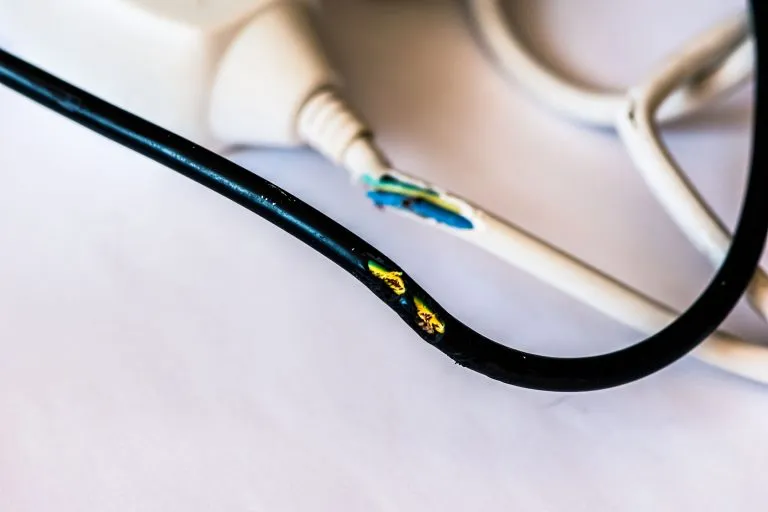
Bite marks on drywall and furniture. A mouse's front teeth never stop growing, so it gnaws constantly to keep them filed down. Look at cabinet corners, baseboards, door frames, stored cardboard, and packaged food in the pantry. Plastic and soft metal get chewed too, including wire sheathing.

Dirty rub trails along baseboards. Mice have poor eyesight and navigate by touch, running the same routes against walls night after night. The oil and grit in their coats builds into a gray smudge line that maps the route for you.
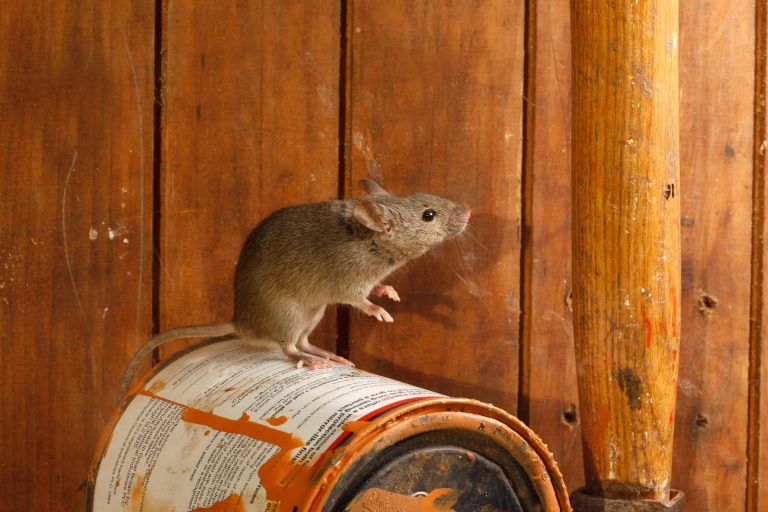
Night noises in walls and ceilings. Scratching, light scurrying, and squeaking between about an hour after dark and dawn. Light and fast is a mouse. Heavy, slow, and in daylight is something bigger. See mice in your walls for how to tell what you are hearing.

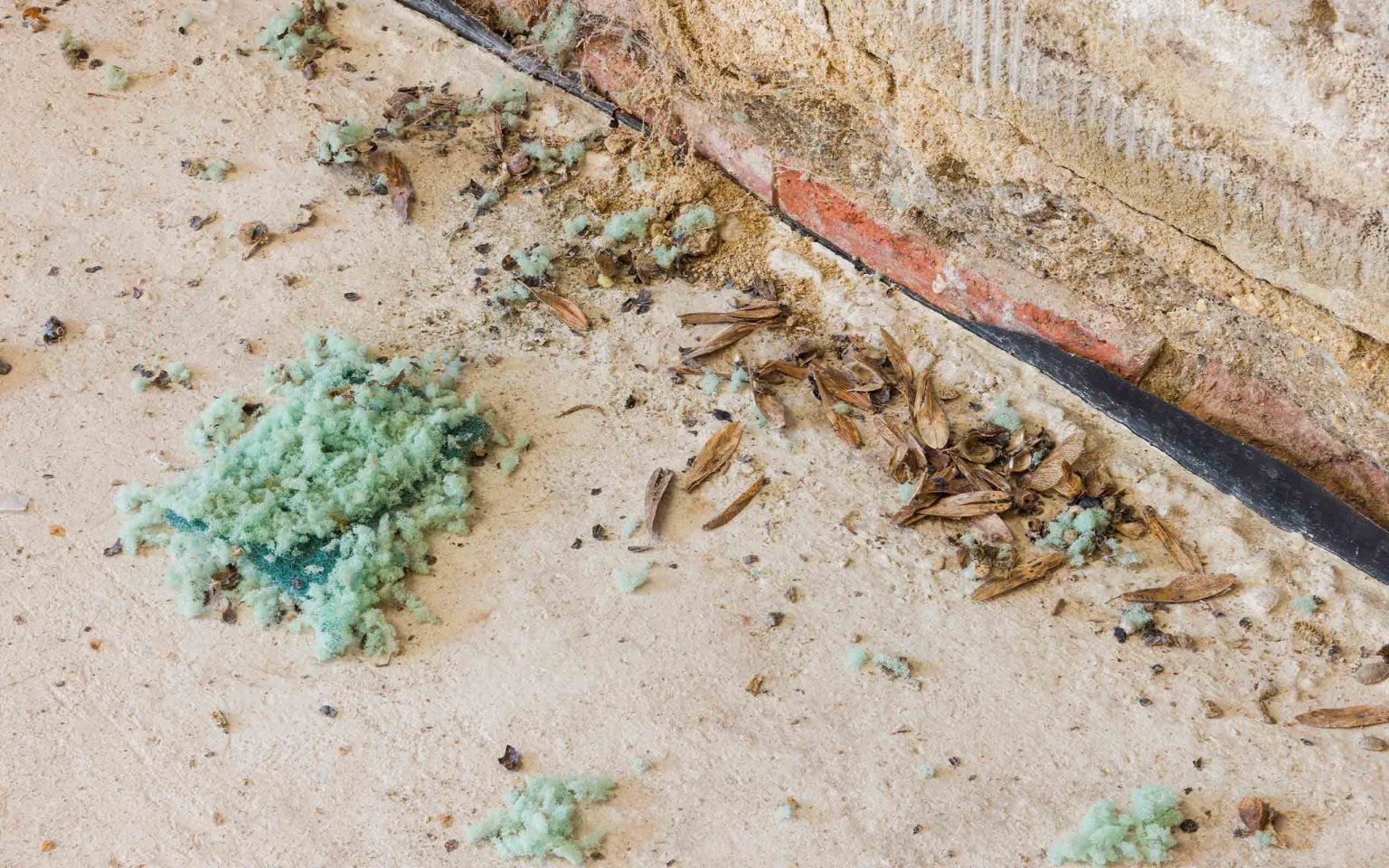
Nesting material. Shredded paper, fabric, dryer lint, and torn-up fiberglass gathered into a loose ball in a drawer you never open, behind a water heater, or in a boxed-up closet. A nest means a resident population, not a visitor.
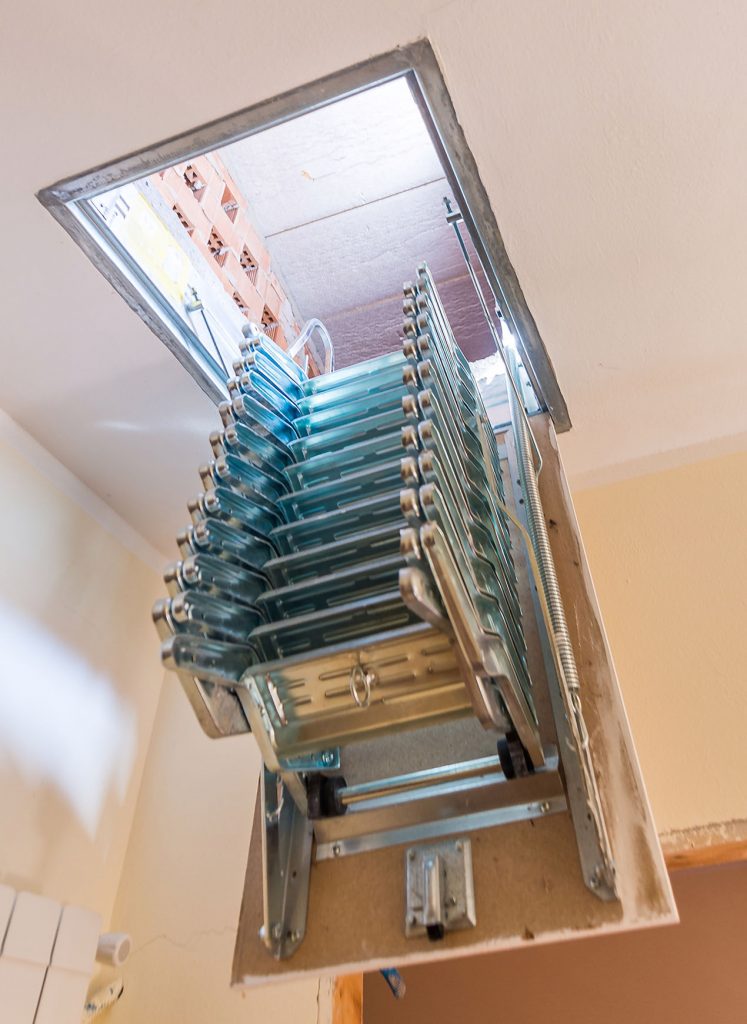
A musky ammonia smell in enclosed spaces. Strongest in a closed pantry, a cabinet under a sink, a crawlspace, or an attic hatch: anywhere air does not move.

Pets fixating on one wall or appliance. A dog or cat that sits and stares at the same eighteen inches of baseboard for days. Pets hear the activity before you do. Not proof, but it tells you where to point the flashlight.
Reading the Droppings
Mouse Droppings vs. What Else You Might Be Looking At
Size and shape do most of the work. Mouse droppings run under a quarter inch and taper to a point at both ends. Rat droppings are roughly three times that and blunter. Cockroach droppings are smaller, ridged, and look like coarse ground pepper.
Getting this right matters, because rats, mice, and voles are three different jobs. Our guide to how to identify rodent droppings walks through the comparison, and the types of mice found in Colorado covers which species you are likely to have.
The OMNIS Process
What a Mice Exterminator Actually Does, Step by Step
Trapping is the part people picture. It is not the part that decides whether the problem comes back. Here is the sequence we run on a Front Range home.


Inspection. Interior and exterior, top to bottom. We confirm the species, find the active runs, locate nesting areas, and work out how far the population has spread. This is also where we tell you if it is smaller than you thought.

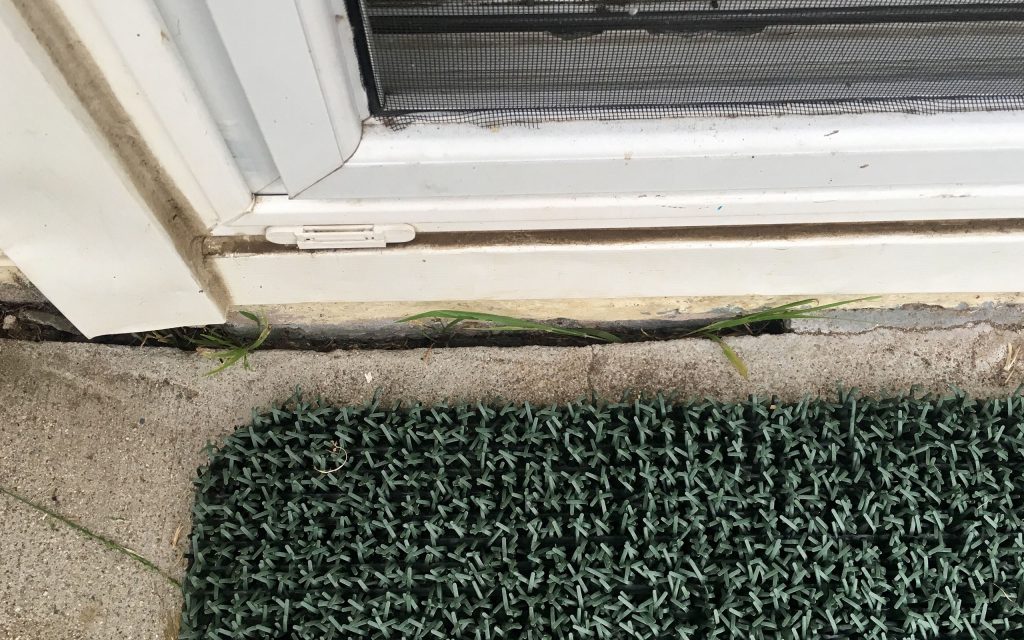
Entry-point mapping. Every gap large enough to matter gets found and recorded. In Douglas County the repeat offenders are garage door sweeps, foundation weep gaps, dryer and bath vents with failed dampers, unsealed utility penetrations, window wells, and the gap where a deck ledger board meets the siding.

Exclusion. Sealing those openings with material a mouse cannot chew through: hardware cloth, copper mesh, sheet metal, mortar. Caulk and expanding foam on their own do not hold.

Interior trapping and monitoring stations. Traps go on the runs we mapped, not scattered at random, and monitoring stations stay in place so we can see whether anything is still moving.

Follow-up visit. We come back, read the stations and traps, and check that the sealed points are holding. If activity continues, the map was incomplete and we go find what we missed.

Ongoing prevention. For most homes this rolls into fall pest control or a quarterly schedule, so the exterior gets rechecked before each rodent season instead of after the next problem.
That whole sequence is what professional mouse control means. If a company quotes you a price without doing step one, you are buying traps, not control.
The Quarter-Inch Gap
Why Exclusion Matters More Than Bait
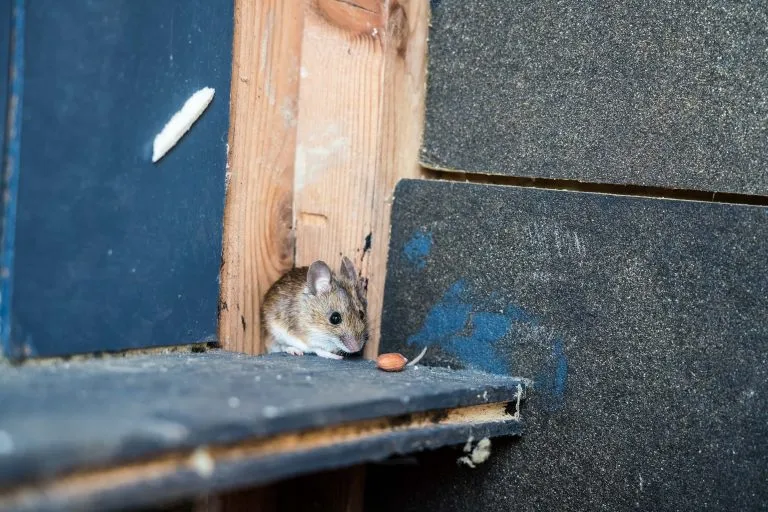
A house mouse gets through a gap about a quarter inch wide, roughly the width of a pencil. Deer mice, common on properties along the foothills edge, are no bigger. If it can fit its skull through, the rest follows.
That single measurement is the argument for exclusion. Clear every mouse out of the house on Tuesday and leave a quarter-inch gap at the garage jamb, and by the end of the month you have mice again, because the reason they came in has not changed. Bait and traps bring down the population already inside. Sealing is what keeps the next ones out, and it also reduces how much rodenticide a property needs at all.
What Shapes the Quote
What Mouse Control Costs in the Denver Metro
Almost nobody in this business publishes what a mouse job costs, and the honest reason is that the number depends on the house. What we can set out is how the work is structured and what moves the figure, because it is the first question every caller asks and being cagey about it wastes everyone’s morning.
What moves the price:

Square footage and number of stories. More wall runs, more roofline, more places to seal.

How far it has spread. Kitchen only is a different job than kitchen, attic, and crawlspace.

How much exclusion the structure needs. Six penetrations to seal and thirty are not the same visit.

Access. Finished basements, tight crawlspaces, and vaulted rooflines add time.

One-time versus quarterly. A one-time treatment ends after the follow-up. A quarterly plan rechecks the exterior every season and covers the rest of the pest list.
OMNIS Service Levels
OMNIS prices rodent work as part of a service level rather than a one-line quote, because the exclusion work is what decides whether the mice come back:

Essentials. Quarterly service, four scheduled visits a year. Covers most common household pests, with free callback service between visits.

Enhanced. Bimonthly service, a visit every other month. The tighter interval is the one we recommend for rodents, because it does not give a population a season to get a foothold. Free callback service between visits.

Maximum. Monthly scheduled visits, built for larger properties and for complex or multiple pest issues. Free callback service between visits.
Quotes are free. You will get the price after we have walked the property, not before, because a quote given over the phone without seeing the house is a guess.
Someone Local on the Line
Mice in the house? Call OMNIS at 720-583-4126.
We are in Castle Rock. Someone local answers, and in October we are already out on rodent calls every day. If you are hearing it in the walls tonight, call. Do not fill out a form and wait.


Colorado Rodent Season
Why Mice Come Indoors in October Along the Front Range
Mice do not decide to move in. They get pushed.
Castle Rock, Larkspur and Monument sit up on the Palmer Divide, high enough that the first hard freeze arrives early and the overnight lows drop fast once it does. Outdoor food collapses at the same time. A heated structure with a quarter-inch gap in it is then the best option for miles, and house mice and deer mice both take it.
That is why rodent calls across the Denver metro climb through October and November and stay up all winter. It also puts a deadline on the exclusion work: sealing the exterior in early October keeps them out, while sealing it in January just shuts the ones already inside in with you.
Two Colorado specifics worth knowing. Deer mice are common on foothills-adjacent and rural-edge properties here, and they are associated with hantavirus, which is why droppings and nesting material in an enclosed space should be handled with gloves and a mask rather than swept up dry. And gnawed wiring is a real fire risk, not a talking point. It is one of several reasons why mice are more than a nuisance.
Where We Work
OMNIS Service Areas
OMNIS is a local, family-owned operation. No franchise, no subcontractors, and the technician who does the inspection is the one who comes back for the follow-up.
- Castle Rock: home base. The Meadows, Founders Village, Terrain, Twin Oaks, and the older Plum Creek builds. See mouse control in Castle Rock.
- Parker: Stonegate, Canterberry, Clarke Farms, The Pinery, Pradera. See mouse control in Parker.
- Castle Pines, Lone Tree and Highlands Ranch: dense newer construction, where garage and utility penetrations are the usual entry route.
- Larkspur and Monument: higher, more open ground, more deer mice.
- Colorado Springs and the surrounding communities.
Not sure whether you are inside the service area? Contact OMNIS and ask.

Mice do not decide to move in. They get pushed.

How Much Does a Mice Exterminator Cost?
Price depends on the size of the house, how far the mice have spread, and how much sealing work the structure needs. A one-time treatment covering inspection, exclusion and a follow-up visit is priced differently from a quarterly plan that rechecks the exterior every season. Rodent work is quoted inside one of three service levels: Essentials (quarterly), Enhanced (bimonthly) or Maximum (monthly). The level that fits depends on the size of the property and how far the mice have spread. Quotes are free, and you get a firm number after we have walked the property.
How Long Does It Take to Get Rid of Mice?
For a typical single-family home caught early, expect the initial visit plus at least one follow-up over the following weeks, long enough to seal the entry points and confirm the traps and monitoring stations have gone quiet. Larger populations, attic or crawlspace involvement, or extensive sealing take longer. Anyone promising same-day resolution is describing a trap-setting appointment, not mouse control.
Do Exterminators Guarantee Mice Won't Come Back?
No honest company can guarantee that, and you should be careful with any that does. A house sits in an environment full of mice, and nothing anyone applies inside it changes that.
What actually keeps the number down is the combination of exclusion and monitoring: seal the openings so re-entry is hard, then keep watching so that if something does get in, you find it in week one instead of month six. That is exactly why follow-up visits and quarterly checks exist. A guarantee is a promise about the future; monitoring is a system for catching what the promise cannot.
Is Mouse Control Safe Around Pets?
No pest control product is risk-free, and we will not tell you otherwise. What we do is prioritize exclusion and trapping so that less rodenticide is needed in the first place, place any stations where pets cannot reach them, and use every product according to its label, including the re-entry timing the label specifies. Tell us about dogs, cats, chickens, or anything else on the property during the inspection and we will plan around it. Our pet-safe pest control page covers the approach in more detail.
How Do I Know if Mice Are Gone?
You watch, and you watch the right things. Clean up all existing droppings so any new ones are unambiguous. Leave monitoring stations and a few traps in place after the activity stops. Note whether the night noises end. Two to three weeks with no new droppings, no new gnaw marks, and untouched stations is a reasonable read that the population inside is down and the seals are holding. A single quiet night is not.
Should I Set Traps Before the Exterminator Comes?
You can, and it does not hurt. Snap traps along a wall with peanut butter on them will catch mice. Just do not clean up the evidence first: leave the droppings, the rub trails, and the nesting material where they are. That evidence is what the inspection reads to find the entry points, and scrubbing it away before we arrive makes the job harder.
Get Started
Talk to OMNIS About Mice
Mice in October are not a wait-and-see problem. The population grows, the damage compounds, and the exterior work that keeps them out gets harder once the ground freezes.
Request a free quote using the form below, or call 720-583-4126 and talk to someone in Castle Rock. We will walk the property, tell you what you are actually dealing with, show you where they are getting in, and give you a price before any work starts. If you caught it early and can handle it yourself, we will tell you that too.
OMNIS Pest Control · Castle Rock, CO · 720-583-4126 · Serving Castle Rock, Parker, Castle Pines, Lone Tree, Highlands Ranch, Larkspur, Monument, Colorado Springs and the Denver metro.

Your Castle Rock Crew
Questions? Talk to OMNIS Pest Control
We would rather answer a question now than fix a problem later.