
 Pantry Pests
 Pill Bugs
 Ants
Ants Spiders
 Bees
Bees Crickets
 Miller Moths
 Millipedes
 Wasps
Wasps Hornets
 Mice
Mice Voles
Voles Rats
Rats Bats
Bats Birds
Birds Gophers
 Mosquitos*
 How to Identify Rodent Droppings
 Keep Pests Out of Your Kitchen
 Keep Ants Away
About Bees in Colorado
Everything you need to know about Colorado's bee species—identification, behavior, habitats, and when they become a problem.
The Importance of Bees
Our world depends on the hard work of bees to continue thriving. Learn more about bees' role in our ecosystem.
Without bees, our world would not support the life we currently have. When bees collect pollen, they get excess pollen on their bodies which eventually spreads as they fly. Each year bees spread pollen across Colorado, helping our state remain green and picture-perfect.
Key facts:
- 80% of flowering plants depend on bees for pollination
- Colorado is home to hundreds of native bee species
- Bees pollinate crops worth billions of dollars annually
- A single bee colony can pollinate 300 million flowers per day
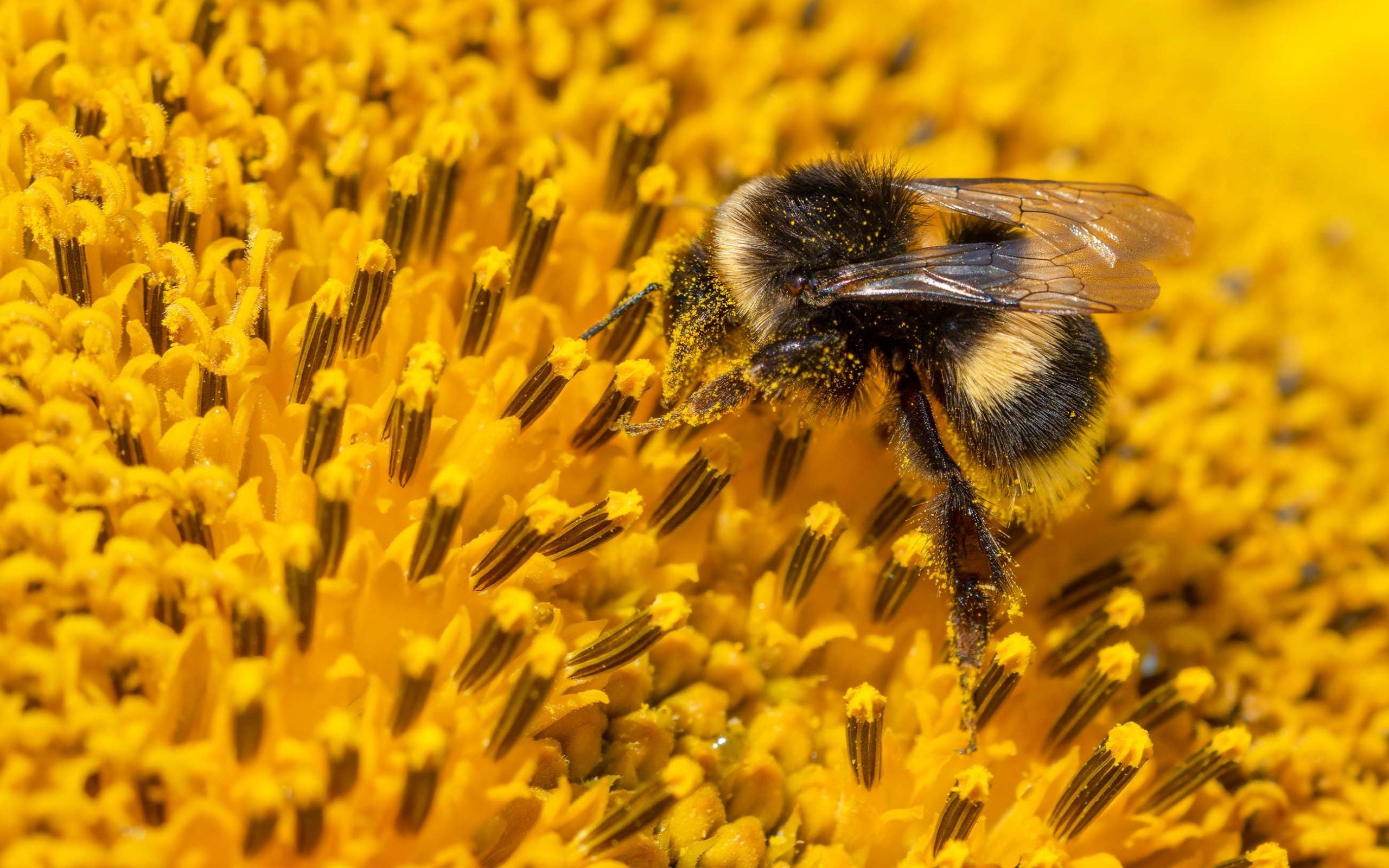
Bees vs. Wasps: How to Tell the Difference
Bees and wasps are often confused, but they have distinct differences that affect how they behave—and how dangerous they are. For a complete guide, see differences between bees and wasps.
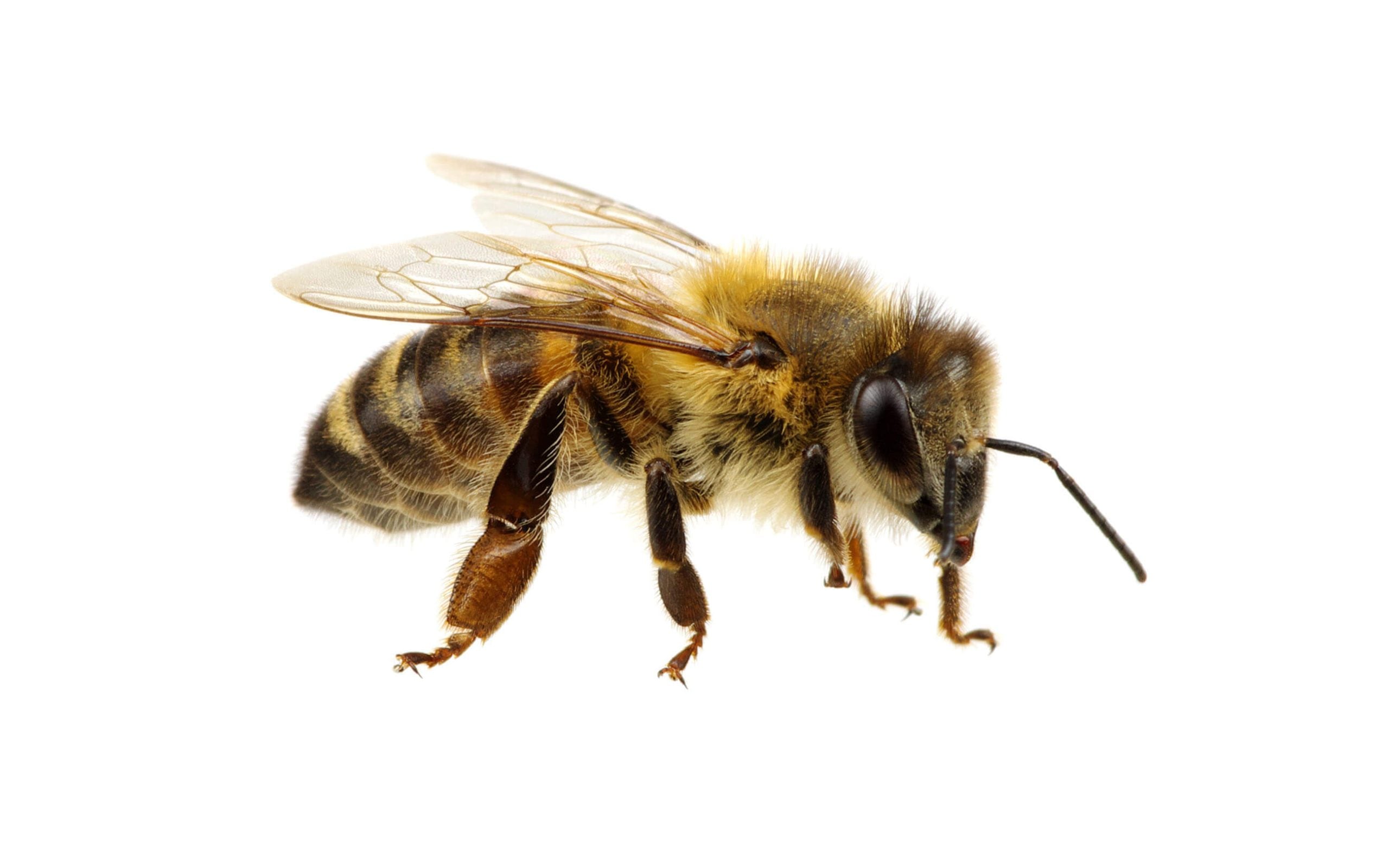
Bees
- Body: Fuzzy, rounded, hairy
- Waist: Thick, less defined
- Diet: Pollen and nectar only
- Behavior: Generally docile
- Stinging: Most sting once, then die
- Nests: Wax honeycomb or ground burrows
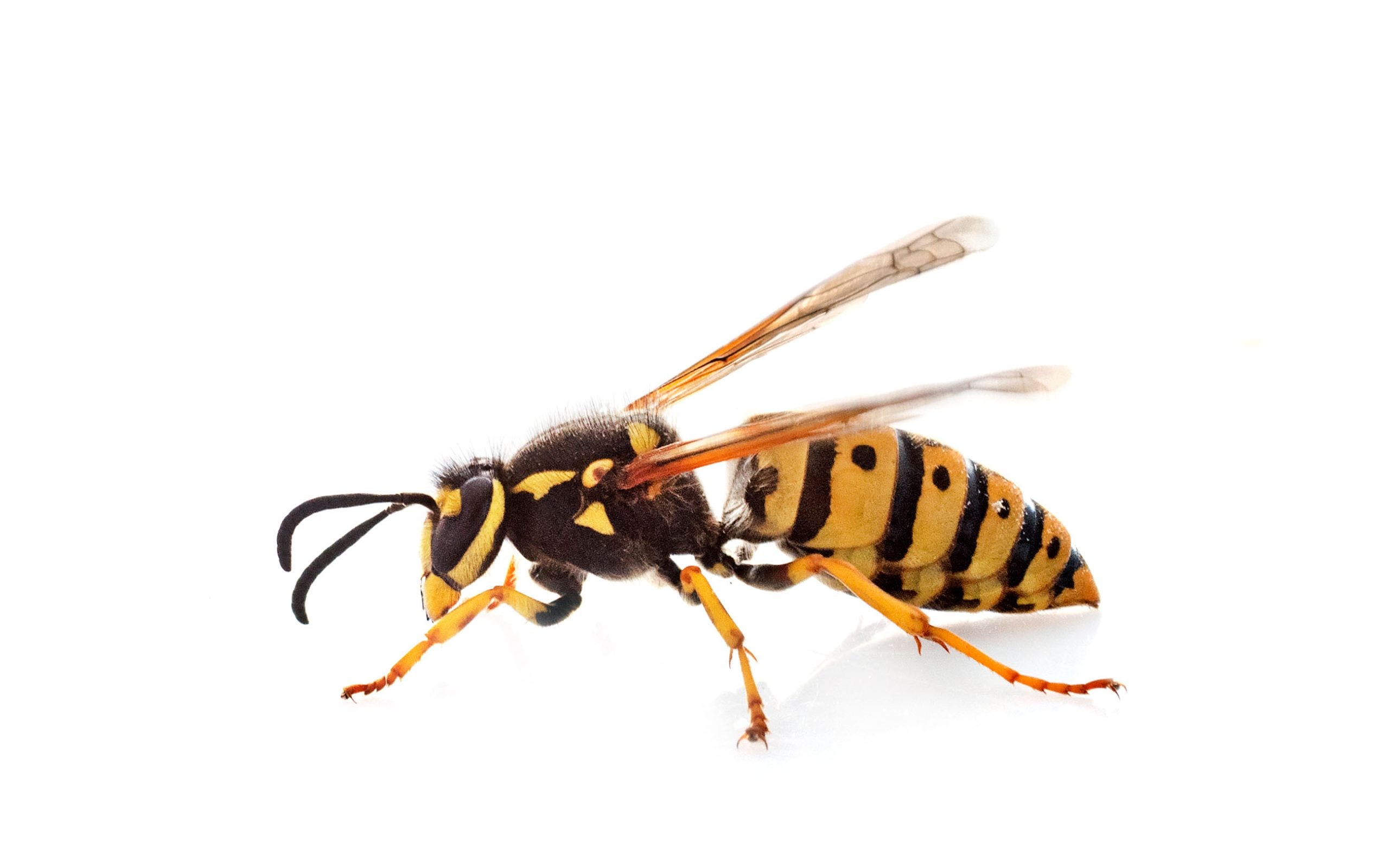
Wasps
- Body: Smooth, shiny, hairless
- Waist: Narrow, pinched
- Diet: Insects, meat, sweets
- Behavior: More aggressive
- Stinging: Can sting multiple times
- Nests: Paper-like material
The quick test: If it's fuzzy and seems interested in flowers, it's likely a bee. If it's smooth, shiny, and hovering around your food, it's probably a wasp. Learn more about how bees and wasps are related.
Types of Bees in Colorado
The diverse bee population in Colorado contributes greatly to the vitality of our state's ecosystem. By learning more about these fascinating insects, we can better protect them and understand when professional help is needed. For more species information, see types of bees and wasps in Colorado.

Honey Bees
Threat Level: 4/10
Honey bees are defensive only when protecting their hive. They won't chase you or attack unprovoked. However, their massive colony size (up to 80,000 bees) means a disturbed hive can mount an overwhelming defensive response. The main concern is allergic reactions—honey bee stings can be fatal for sensitive individuals.
Everyone knows honey bees best because of the delicious honey their hives create. They flaunt a pale yellow and black medium-sized body, and like most bee species, hair covers their bodies to help collect pollen.
Size: ½ to ⅝ inch
Appearance: Pale yellow and black stripes, fuzzy body, large eyes
Colony size: 10,000 to 80,000 bees—massive compared to other species
Nesting: Build wax honeycomb inside enclosed cavities—tree hollows, wall voids, attics, chimneys.
Behavior: When they sting, their barbed stinger gets stuck in the victim's skin, killing the bee—so they sting only as a last resort.
Lifecycle: Colonies are perennial—they survive winter by clustering together for warmth. A single queen can live 2-5 years.

Bumblebees
Threat Level: 2/10
Bumblebees are among the most docile bees you'll encounter. Their large size and loud buzz make them easy to notice and avoid. They rarely sting unless directly handled or their ground nest is stepped on. Small colony size means even a disturbed nest poses minimal threat. Stings are painful but rarely cause severe reactions.
The gentle giants of the bee world—incredibly docile and common throughout Colorado during spring and summer. These fluffy giants amble from flower to flower collecting nectar and pollen.
Size: Over 1 inch—larger than most bees
Appearance: Large, very hairy bodies with rich black coloring, yellow and white stripes, short wings
Colony size: A few hundred residents—much smaller than honey bees
Nesting: Build nests close to the ground—under woodpiles, in compost heaps, or inside abandoned rodent tunnels.
Behavior: Females can sting multiple times without dying. Males don't have stingers at all.
Lifecycle: Annual colonies. Only new queens survive winter by hibernating underground.
Carpenter Bees
Threat Level: 3/10 (Sting) | 6/10 (Property Damage)
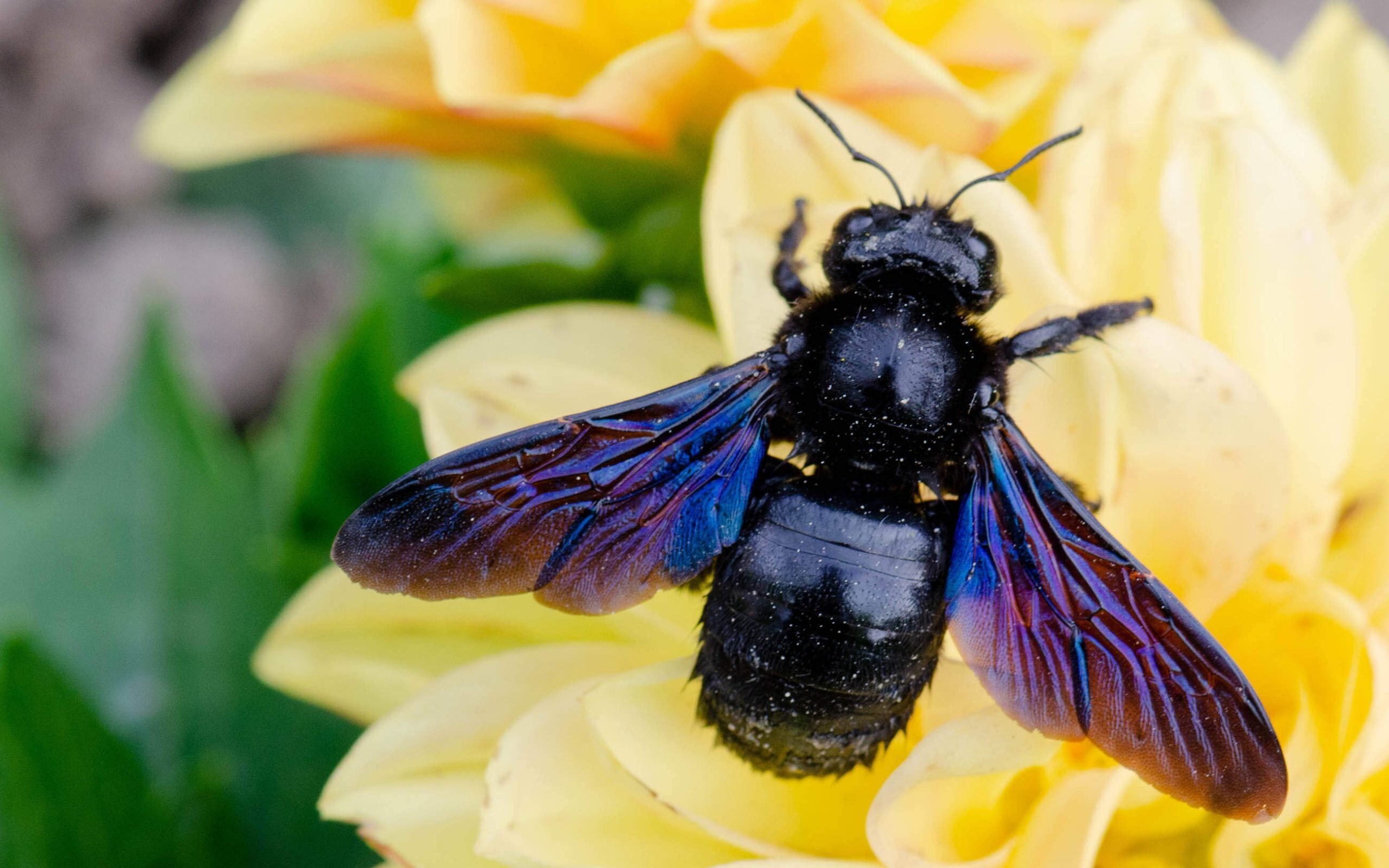
Carpenter bees pose minimal sting risk—males are completely harmless (no stinger) despite aggressive-looking hovering behavior, and females rarely sting unless directly handled. However, they're the only bee species that causes significant structural damage. Their tunneling weakens wood over time, and holes attract new bees year after year, compounding damage.
Carpenter bees look similar to bumblebees but have one key distinguishing feature: hairless, shiny black abdomens. They're solitary—no colony to defend.
Size: Approximately 1 inch
Appearance: Yellow/black thorax like bumblebees, but with a distinctive shiny, hairless black abdomen
Nesting: Drill perfectly round holes (about ½ inch diameter) in wood to create "galleries" for eggs. Prefer unpainted, weathered wood.
Signs of infestation: Perfectly round holes in wood, sawdust beneath holes, yellow staining near entrances.

Mason Bees
Threat Level: 1/10
Mason bees are essentially harmless to humans. They're solitary (no colony to defend), non-aggressive, and rarely sting even when handled. They don't damage structures—they use existing holes rather than drilling new ones. These are bees you want around. Removal is almost never necessary.
Mason bees are solitary native bees famous for their efficient pollination and use of mud to construct nests. The term "busy bee" suits mason bees well.
Size: Slightly smaller than honey bees
Appearance: Dark coloring, often with metallic blue or green sheen, dense hair
Nesting: Lay eggs in existing holes—masonry cracks, nail holes, hollow stems. Seal cells with mud. Don't drill holes like carpenter bees.
Behavior: Visit many different flowers per trip—making them incredibly efficient pollinators. A single mason bee can pollinate as much as 100 honey bees.
Lifecycle: Solitary. Adults emerge in spring, mate, lay eggs, and die by early summer.

Leafcutter Bees
Threat Level: 1/10
Leafcutter bees pose virtually no threat to humans. They're solitary, docile, and focused entirely on leaves and flowers—not people. They can sting but almost never do. The only "damage" they cause is cosmetic—circular holes in leaves that don't harm plant health. These beneficial pollinators are worth keeping around.
Leafcutter bees earn their name from their distinctive nest-building behavior: females cut small, circular pieces from leaves to construct nests.
Size: Similar to honey bees
Appearance: Dark colored, hairy underneath for carrying pollen
Nesting: Use leaf pieces to line nest tunnels in existing cavities—hollow stems, holes in wood, even rolled paper.
Signs: Distinctive circular holes cut in leaves—looks like someone used a hole punch on your plants.
Note: Removal is rarely necessary. These beneficial pollinators don't damage structures.
Sweat Bees
Threat Level: 2/10
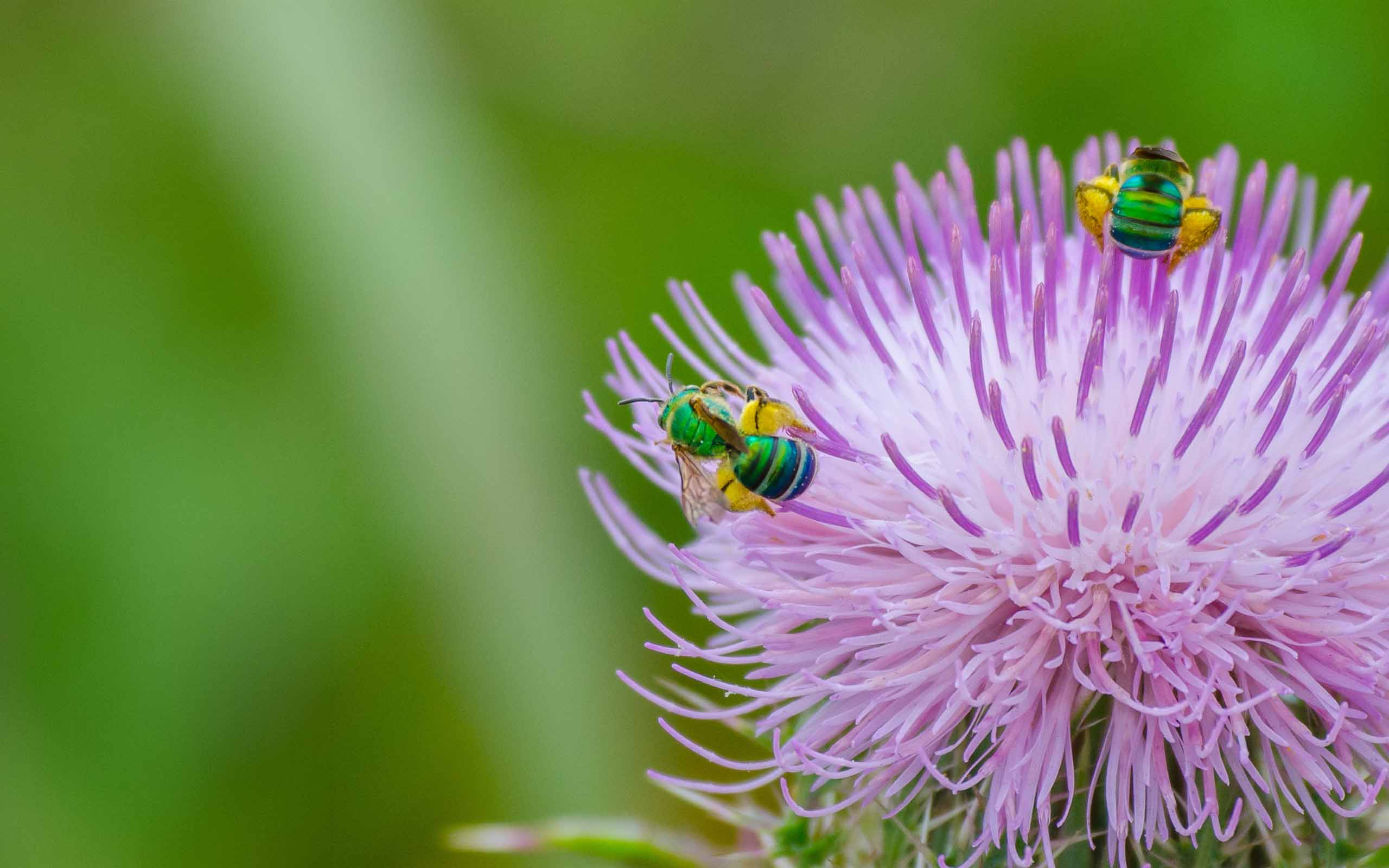
Sweat bees are tiny and mostly harmless. They land on people to drink sweat, which can be startling, but they only sting when trapped against skin. The sting is very mild—more of a pinch than real pain. They're too small to pose any serious threat, and their pollination benefits far outweigh any minor annoyance.
Sweat bees are tiny—often overlooked until they land on you.
Size: Very small—about ¼ inch
Appearance: Often metallic green, bronze, or iridescent coloring. Some of the most beautiful bees in Colorado.
Nesting: Most species nest in the ground, creating small burrows.
Behavior: Attracted to the salt and moisture in human sweat—hence the name. They land on people to feed on perspiration.
Stinging: Can sting multiple times, but only when trapped or directly threatened. Very mild sting.
Note: Rarely require control unless populations are unusually high in a specific area.
Where Bees Build Hives
Bees construct hives to house their colonies and protect against weather and predators. Understanding where bees nest helps you identify potential problems.
Honey Bee Habitats
Honey bees seek enclosed cavities for their large colonies. They insulate their hives to survive Colorado's extreme temperatures.
- Tree cavities and hollow logs
- Wall voids and attics
- Under eaves and porches
- Inside chimneys
- Abandoned structures and vehicles
Bumblebee Habitats
- Underground in abandoned rodent burrows
- Under woodpiles and debris
- In compost heaps
- Dense shrubs at ground level
Carpenter Bee Habitats
- Fascia boards and eaves
- Deck railings and posts
- Unpainted or weathered wood
- Outdoor furniture
- Fence posts and pergolas
How Bees Benefit Your Property
Bees visiting your garden are valuable partners, not pests. Learn more about the impact of bees and wasps on your garden.
Pollination
Bees pollinate flowers, vegetables, and fruit trees. A healthy bee population can significantly increase garden yields. Without bees, many plants simply won't produce fruit.
Native plants
Colorado's native bees are specially adapted to pollinate native wildflowers, supporting local ecosystems that evolved together over thousands of years.
Natural balance
By supporting plant reproduction, bees help maintain the food web that includes birds, butterflies, and other wildlife.
The bottom line
Bees in your garden are beneficial. Bees in your walls, chimney, or near high-traffic areas are a problem requiring professional attention.
When Bees Become a Problem
As docile as most bee species are, several situations justify professional removal:
Hives in walls or structures
Established honey bee hives inside walls can be elaborate, with multiple combs and pounds of honey. They attract pests, cause structural damage, and can be very difficult to remove without professional help.
Nests near high-traffic areas
A hive near your front door, play area, or outdoor dining space puts everyone at risk—especially children and pets who may accidentally disturb the nest.
Carpenter bee damage
Unlike other bees, carpenter bees cause structural damage that compounds year after year as new bees use existing galleries.
Large swarms
A swarm of bees—thousands clustering on a branch or structure—is intimidating but usually not aggressive. However, they're looking for a new home, and you don't want that home to be your walls.
Household allergies
If anyone in your home has bee allergies, even docile bees nearby pose an unacceptable risk.
The danger of allergies: Many people walk around with severe allergies to bee stings that could lead to death. Some don't know they're allergic until they're stung. A single sting can trigger anaphylaxis in sensitive individuals.
Honey Bee Protection & Humane Removal
Honey bees are essential pollinators facing population decline worldwide. When possible, we work with local beekeepers to relocate honey bee colonies rather than eliminate them.
Why relocation matters:
- Preserves essential pollinators for our ecosystem
- Relocated colonies continue contributing to Colorado agriculture
- More effective than killing—dead hives attract pests and new colonies
- Often required or encouraged by local regulations
How humane removal works: Our beekeeper partners carefully extract the entire colony, including the queen and honeycomb. The bees are transported to an apiary where they'll continue to thrive and pollinate.
When relocation isn't possible—due to Africanized bees, colony health issues, or immediate safety threats—we use targeted treatments that minimize environmental impact.

Need Professional Bee Control?
If bees have become a problem on your property, OMNIS Pest Control can help. We identify the species, assess the situation, and recommend the safest, most effective solution—including humane relocation when possible.
Learn about our bee control services →
Call us at 720-583-4126
More Pest Protection.
More Peace of Mind.
Other Bee & Wasp-Related Blogs

Bees Role in Our Ecosystem

Black Wasps in Colorado

Why Are Bees And Wasps Attracted To My House?
