
 Pantry Pests
 Pill Bugs
 Ants
Ants Spiders
 Bees
Bees Crickets
 Miller Moths
 Millipedes
 Wasps
Wasps Hornets
 Mice
Mice Voles
Voles Rats
Rats Bats
Bats Birds
Birds Gophers
 Mosquitos*
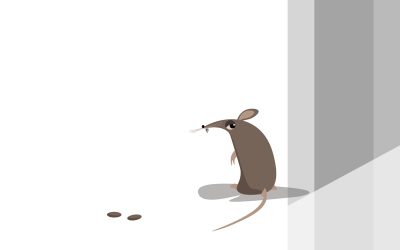 How to Identify Rodent Droppings
 Keep Pests Out of Your Kitchen
 Keep Ants Away
About Wasps in Colorado
Everything you need to know about Colorado's wasp species—identification, behavior, nest types, and when they become dangerous.
What Are Wasps?
Wasps are any insect of the narrow-waisted suborder Apocrita of the order Hymenoptera—the same group that includes bees and ants. With more than 30,000 documented species worldwide, wasps are incredibly diverse.
While they look similar to bees, wasps have distinct characteristics:
Smooth Bodies
Less fuzzy than bees
Narrow Waists
Distinctive pinched midsection
Multiple Stings
Unlike bees, wasps keep their stinger and can sting repeatedly
Predatory Diet
Many wasps hunt insects, while bees eat only pollen and nectar
More Aggressive
Wasps are territorial and quick to attack
Most wasp species are solitary, but the ones people fear most—yellow jackets, hornets, and paper wasps—are social species living in colonies.
Wasps vs. Bees: How to Tell the Difference
For a complete guide, see differences between bees and wasps.
The quick test: If it's smooth, shiny, and hovering around your food or garbage, it's probably a wasp. If it's fuzzy and focused on flowers, it's likely a bee. Learn more about how bees and wasps are related.
Wasps
- Body: Smooth, shiny, hairless
- Waist: Narrow, pinched
- Diet: Insects, meat, sweets, nectar
- Behavior: Aggressive, territorial
- Stinging: Can sting multiple times
- Nests: Paper-like material or mud
Bees
- Body: Fuzzy, rounded, hairy
- Waist: Thick, less defined
- Diet: Pollen and nectar only
- Behavior: Generally docile
- Stinging: Most sting once, then die
- Nests: Wax honeycomb
Common Wasps in Colorado
Colorado is home to several wasp species that homeowners frequently encounter.
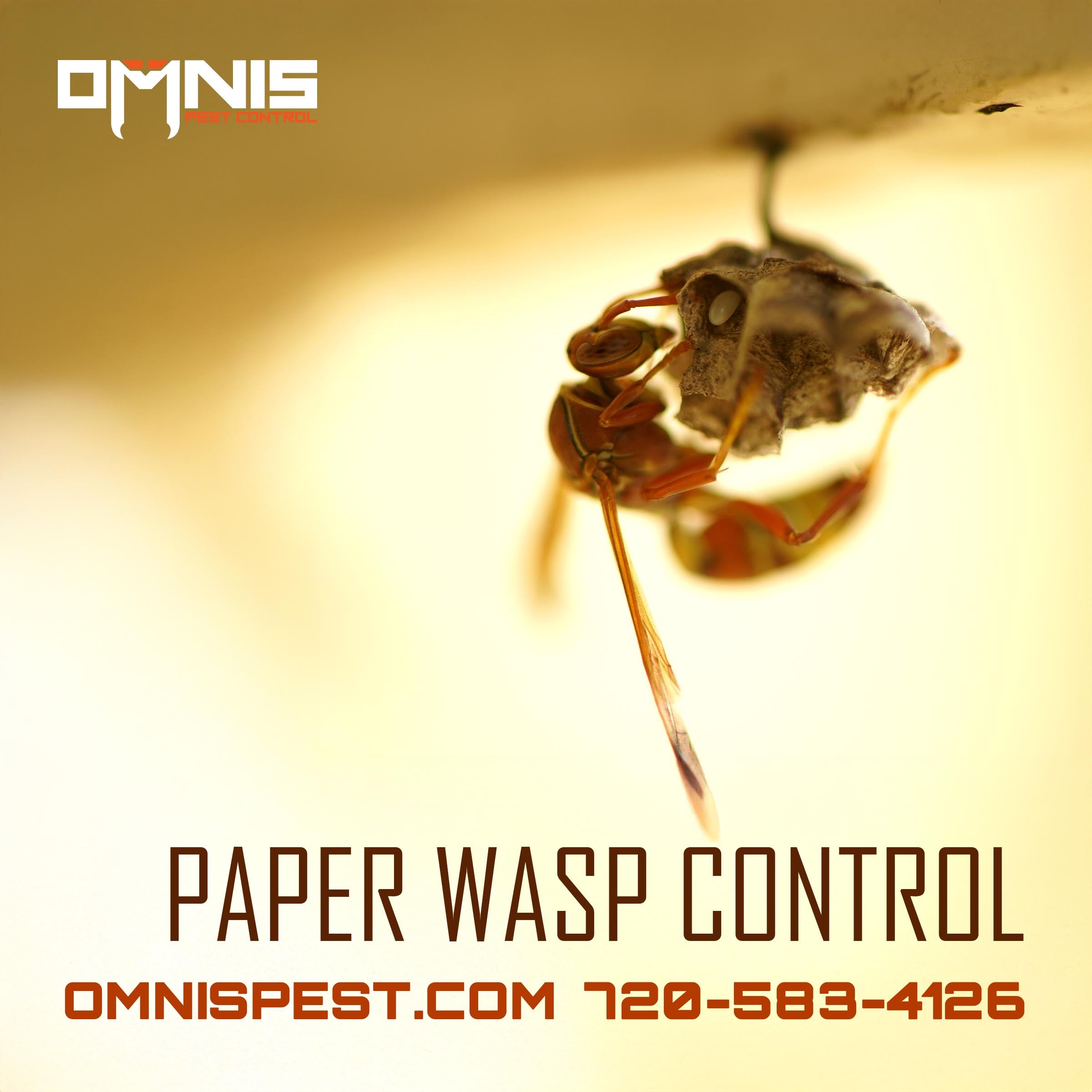
Paper Wasps
Threat Level: 5/10
Paper wasps are moderately aggressive—less dangerous than yellow jackets but still capable of painful stings. They generally won't attack unless their nest is directly threatened. However, they often build nests in high-traffic areas like doorways and porches, increasing encounter risk. Stings are painful and can trigger allergic reactions in sensitive individuals.
Appearance: Slender bodies, brownish coloring with yellow or reddish markings. Some are reddish-brown or black. Long legs that dangle when flying.
Size: ¾ to 1 inch
Nesting: Build distinctive open, umbrella-shaped nests from chewed wood fibers mixed with saliva—giving them a papery appearance. Nests hang from horizontal surfaces: eaves, porch ceilings, tree branches, fence rails.
Behavior: Social wasps living in small colonies (typically under 100). Hunt caterpillars and other insects to feed larvae. Adults eat nectar. Less aggressive than yellow jackets but will defend nests.
Colony lifecycle: Annual colonies. Only mated queens survive winter. New nests built each spring.
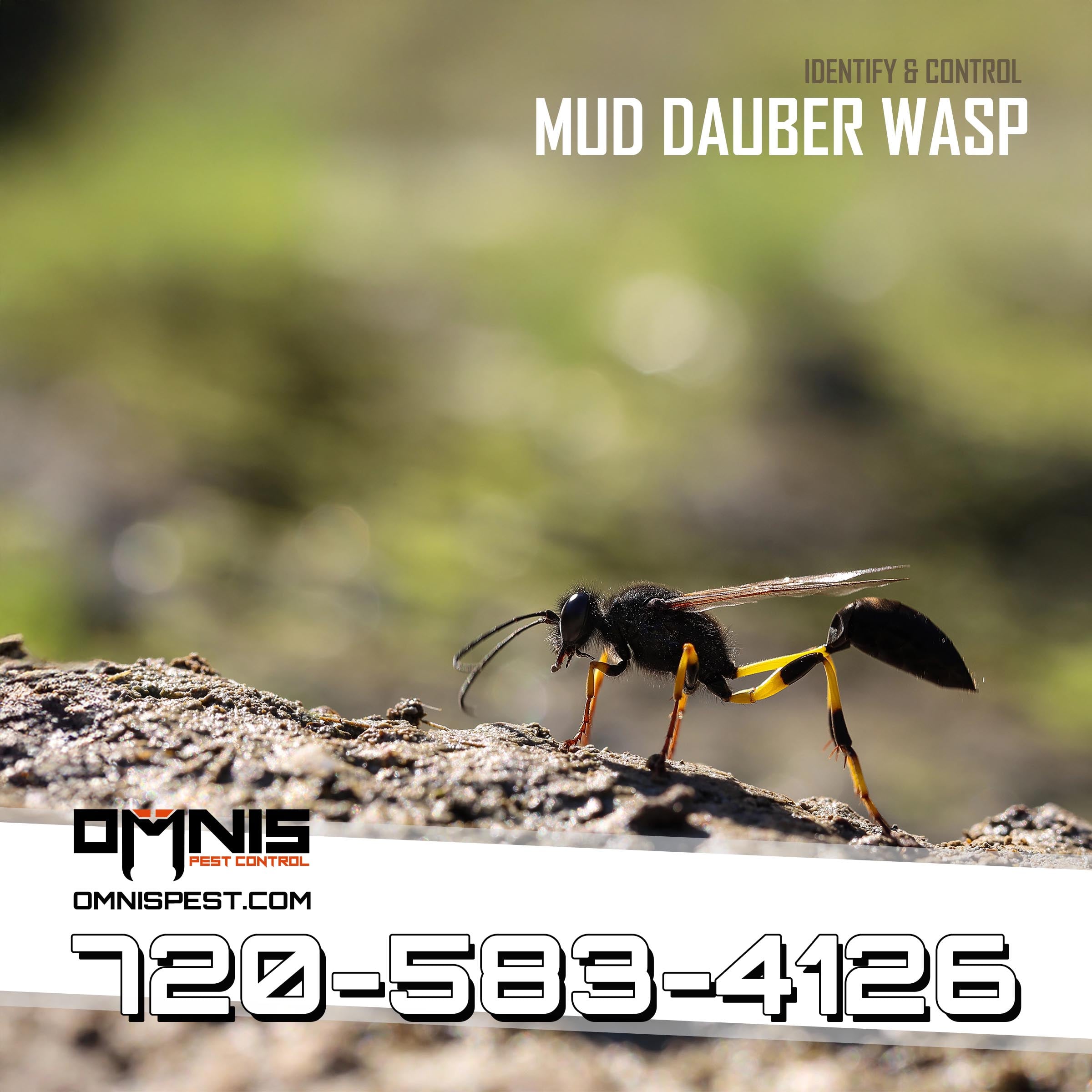
Mud Daubers
Threat Level: 2/10
They may look a little scary, but Mud daubers are among the least dangerous wasps you'll encounter. They're solitary (no colony to defend) and rarely sting unless directly handled. Their main concern is property damage—mud nests can stain walls, damage paint, and be difficult to remove from stucco. Their presence often indicates a spider population, as they hunt spiders to feed their larvae.
Appearance: Long, slender bodies with a distinctive thread-like "waist." Black, metallic blue, or black and yellow coloring. Learn more about black wasps in Colorado.
Size: ½ to 1 inch
Nesting: Build characteristic mud tube nests on walls, under eaves, in attics, garages, and other sheltered spaces. Each tube contains eggs and paralyzed spiders (food for larvae).
Behavior: Solitary—each female builds her own nest. Not aggressive. Often seen collecting mud near water sources. Hunt spiders exclusively.
Note: In Colorado's dry climate, mud dauber nests can be particularly stubborn on stucco surfaces, leaving stains when removed.
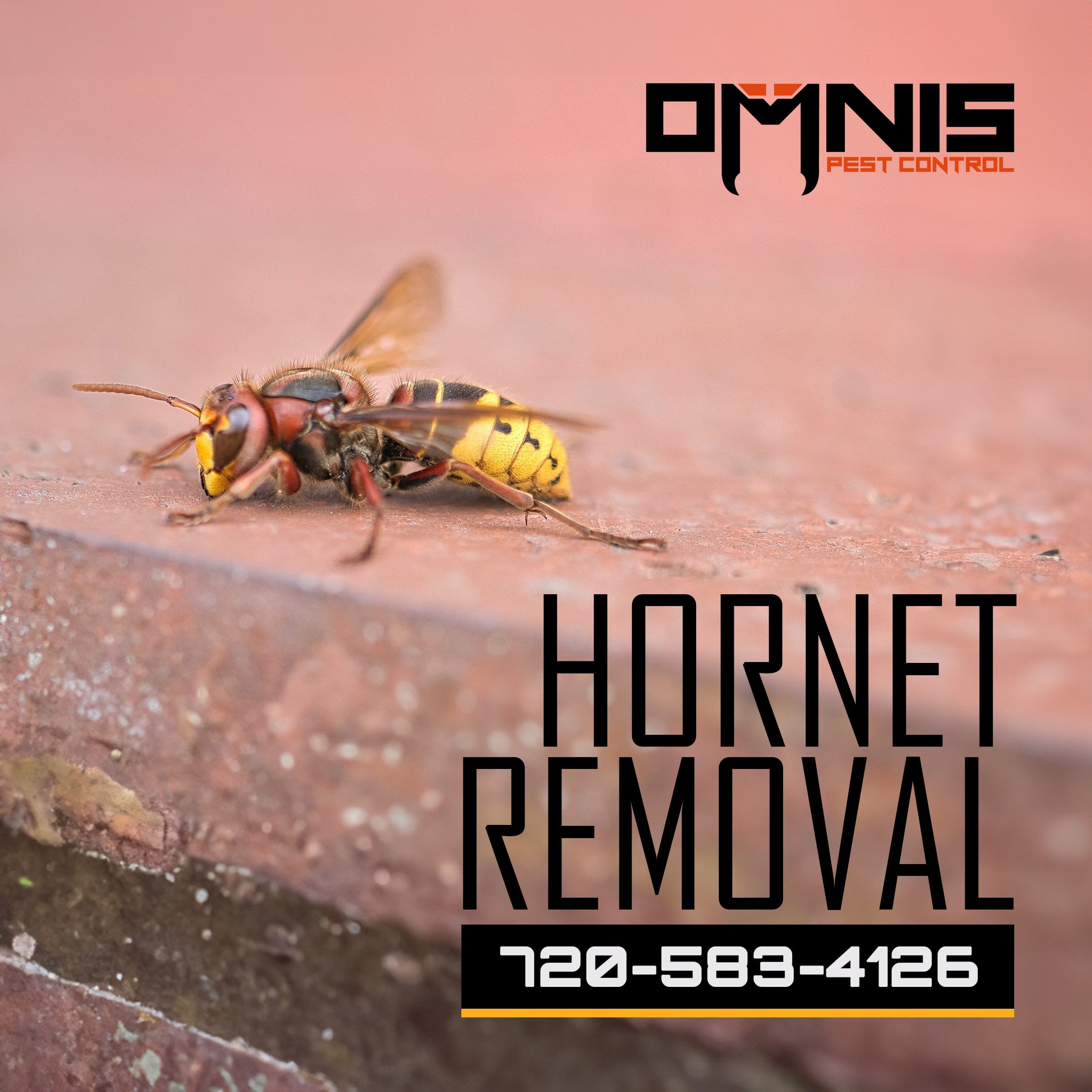
Hornets (Are Giant Wasps)
Threat Level: 7/10
Hornets are the largest social wasps—intimidating but actually less aggressive than yellow jackets. They won't attack unless their nest is threatened, but when they do, their size means more painful stings and more venom. Baldfaced hornets are most common in Colorado and are fiercely defensive of their nests.
Appearance: Baldfaced hornets: black with white face markings. European hornets: yellow and brown. Both are notably larger than other wasps.
Size: ¾ to 1.5 inches—significantly larger than yellow jackets
Nesting: Large, enclosed, football-shaped paper nests. Usually in trees, shrubs, or on building exteriors. Single entrance at bottom. Can reach basketball size by late summer.
Behavior: Hunt insects including other wasps. Defensive when nest is approached. Will pursue threats.

Yellow Jackets
Threat Level: 9/10
Yellow jackets are the most dangerous wasps in Colorado. They're highly aggressive, especially in late summer when food becomes scarce. They often nest underground or in wall voids—you may not know a nest exists until you step on it or disturb it with lawn equipment. They can sting multiple times, will chase threats, and release pheromones that summon more attackers.
Appearance: Compact bodies with bold black and yellow stripes. Smooth and shiny. Tuck legs close to body when flying.
Size: ½ inch
Nesting: Enclosed paper nests, often underground in abandoned rodent burrows. Also wall voids, attics, and dense shrubs. Colonies can contain thousands by late summer.
Behavior: Highly territorial. Carnivorous—attracted to meat at picnics. Also eat sweets. Become increasingly aggressive in fall.
Types of Wasp Nests
Different wasp species build distinctly different nests. Identifying the nest type helps determine which species you're dealing with. For more details, read about different types of bees and wasps nests.
Paper Wasp Nests
Open, umbrella-shaped structures with visible hexagonal cells. Hang from a single stalk. Found under eaves, porch ceilings, and horizontal surfaces. Relatively small—usually under 200 cells.
Yellow Jacket Nests
Enclosed paper nests with outer envelope. Often underground in rodent burrows, or in wall voids and attics. Can grow very large—containing thousands of cells by late summer.
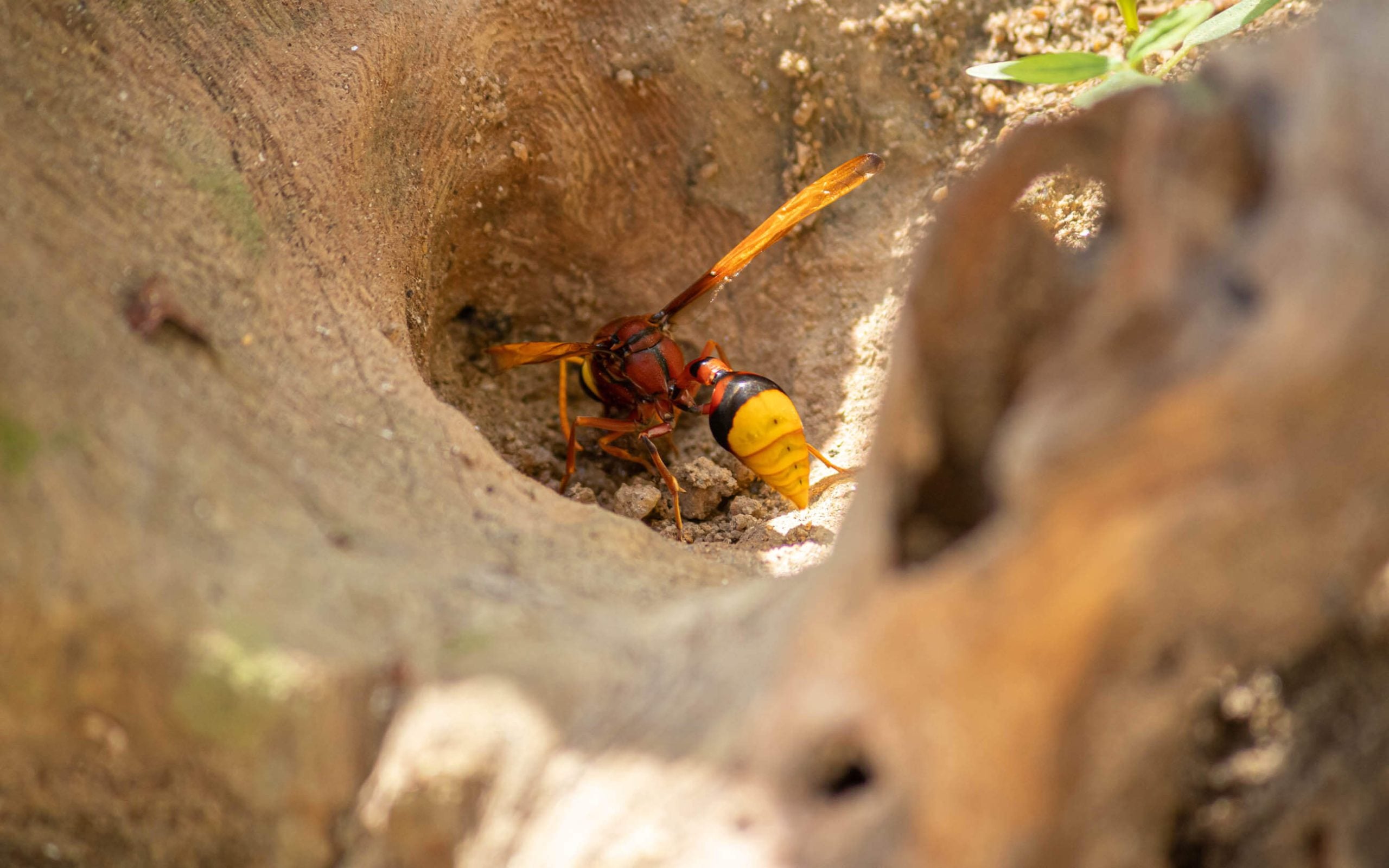
Hornet Nests
Large, enclosed, football or teardrop-shaped paper nests. Usually elevated—in trees, shrubs, or attached to buildings. Single entrance hole at bottom. Can reach basketball size.
Mud Dauber Nests
Clusters of cylindrical mud tubes attached to walls, under eaves, or in sheltered spaces. Each tube contains eggs and paralyzed spiders. No paper construction.
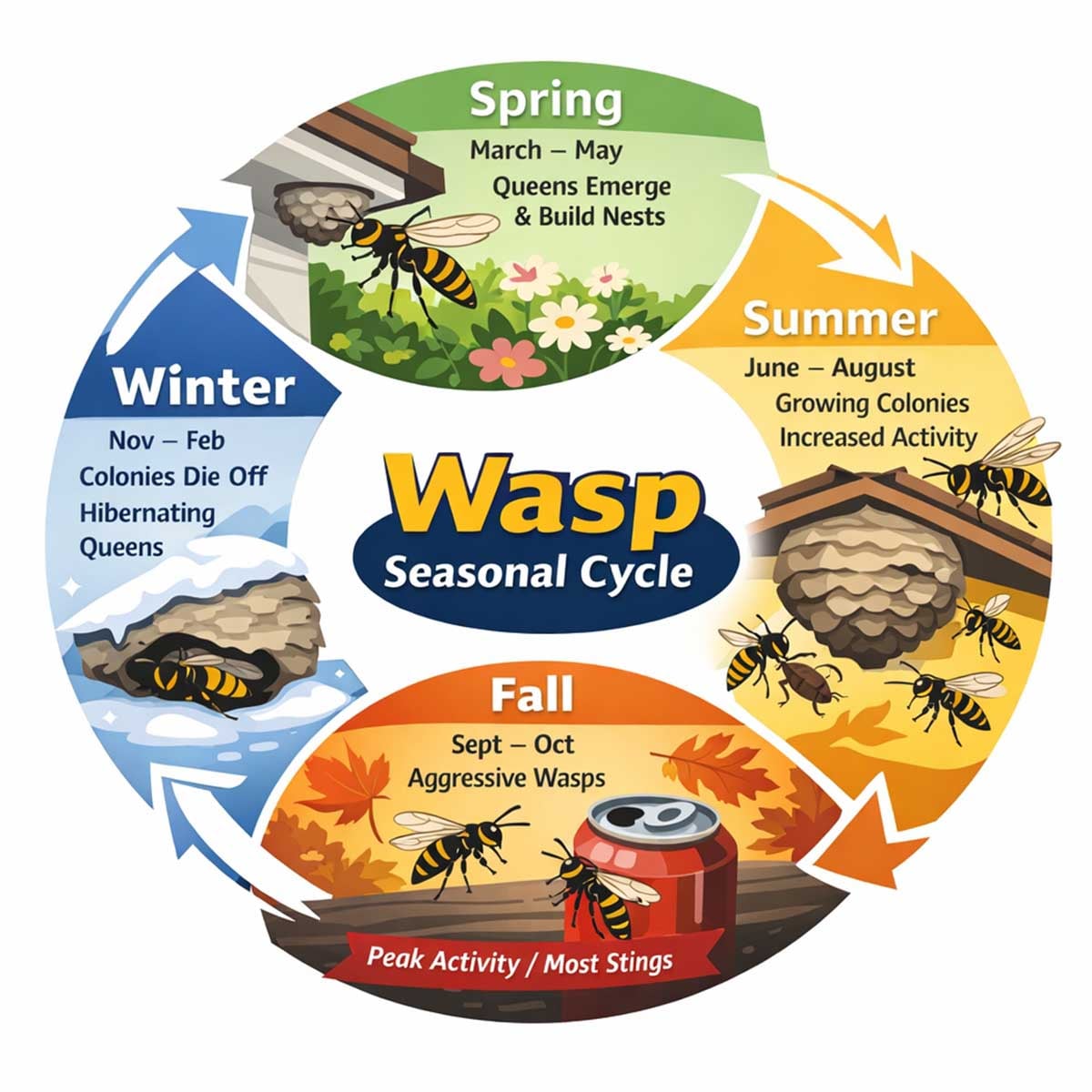
Wasp Colony Lifecycle
Understanding the wasp lifecycle helps explain why they become more dangerous at certain times of year.
Spring (March–May): Overwintered queens emerge and begin building new nests. Colonies are small and wasps are less aggressive. Best time for preventive treatment.
Summer (June–August): Colonies grow rapidly. Workers hunt insects to feed larvae. Increased wasp activity around properties.
Late Summer/Fall (September–October): Colonies reach peak size. Food becomes scarce. Wasps become aggressive, competing for sugary foods. Most stings occur during this period.
Winter (November–February): Colonies die off. Only newly mated queens survive, hibernating in protected spaces. Old nests are abandoned and won't be reused—but new queens may build nearby.
Wasps and Your Ecosystem
Regardless of the damage they can cause, wasps are a necessary part of the ecosystems they live in. While we don't recommend leaving a wasp nest in close proximity to your home, it helps to know how they can benefit your local environment. Learn more about the impact of wasps on your garden.
Pest control: Wasps are predators. Social wasps hunt caterpillars, flies, aphids, and other insects to feed their larvae. A single colony can eliminate thousands of garden pests per season. Mud daubers specialize in hunting spiders.
Pollination: While not as efficient as bees, adult wasps feed on nectar and do contribute to pollination as they move between flowers.
Decomposition: Some wasp species help break down dead insects and organic matter, contributing to nutrient cycling.
Food web: Wasps serve as food for birds, spiders, and other predators—supporting broader ecosystem health.

Need Professional Wasp Control?
If wasps have become a problem on your property, OMNIS Pest Control can help. We identify the species, locate all nests, and eliminate the threat safely.
Learn about our wasp control services →
Call us at 720-583-4126
More Pest Protection.
More Peace of Mind.
Other Bee & Wasp-Related Blogs
Bees Role in Our Ecosystem

Black Wasps in Colorado

Why Are Bees And Wasps Attracted To My House?
