
 Pantry Pests
 Pill Bugs
 Ants
Ants Spiders
 Bees
Bees Crickets
 Miller Moths
 Millipedes
 Wasps
Wasps Hornets
 Mice
Mice Voles
Voles Rats
Rats Bats
Bats Birds
Birds Gophers
 Mosquitos*
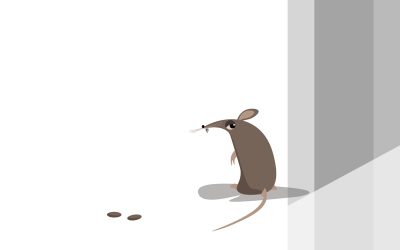 How to Identify Rodent Droppings
 Keep Pests Out of Your Kitchen
 Keep Ants Away
PEST LIBRARY
About Snakes
Colorado is home to around twenty-five kinds of snake, and the great majority are harmless. Here is how to tell the ones worth worrying about from the ones doing you a favor, what a snake nest actually is, and what to do when one turns up.
FIELD NOTES
Colorado Snakes by the Numbers
Before you panic about the snake in the yard, a few numbers worth knowing about Colorado's snakes.
25
Species in Colorado
About twenty-five species live across the state, and the vast majority are non-venomous and harmless.
2
Venomous Species
Only the rattlesnakes carry dangerous venom. Nearly everything else you will meet here is harmless.
Solitary
Not Nesters
Snakes do not live in colonies or build nests. The wriggling snake ball people picture is mostly a myth.
Helpful
Rodent Control
Snakes eat mice, rats, and insects. Out in the yard, where they belong, they do real good.
FIELD GUIDE
Colorado's Common Snakes
Four snakes you are most likely to run into around Castle Rock, what to look for, and which ones to leave well alone. Click a square to jump to a species or scroll through them all below.



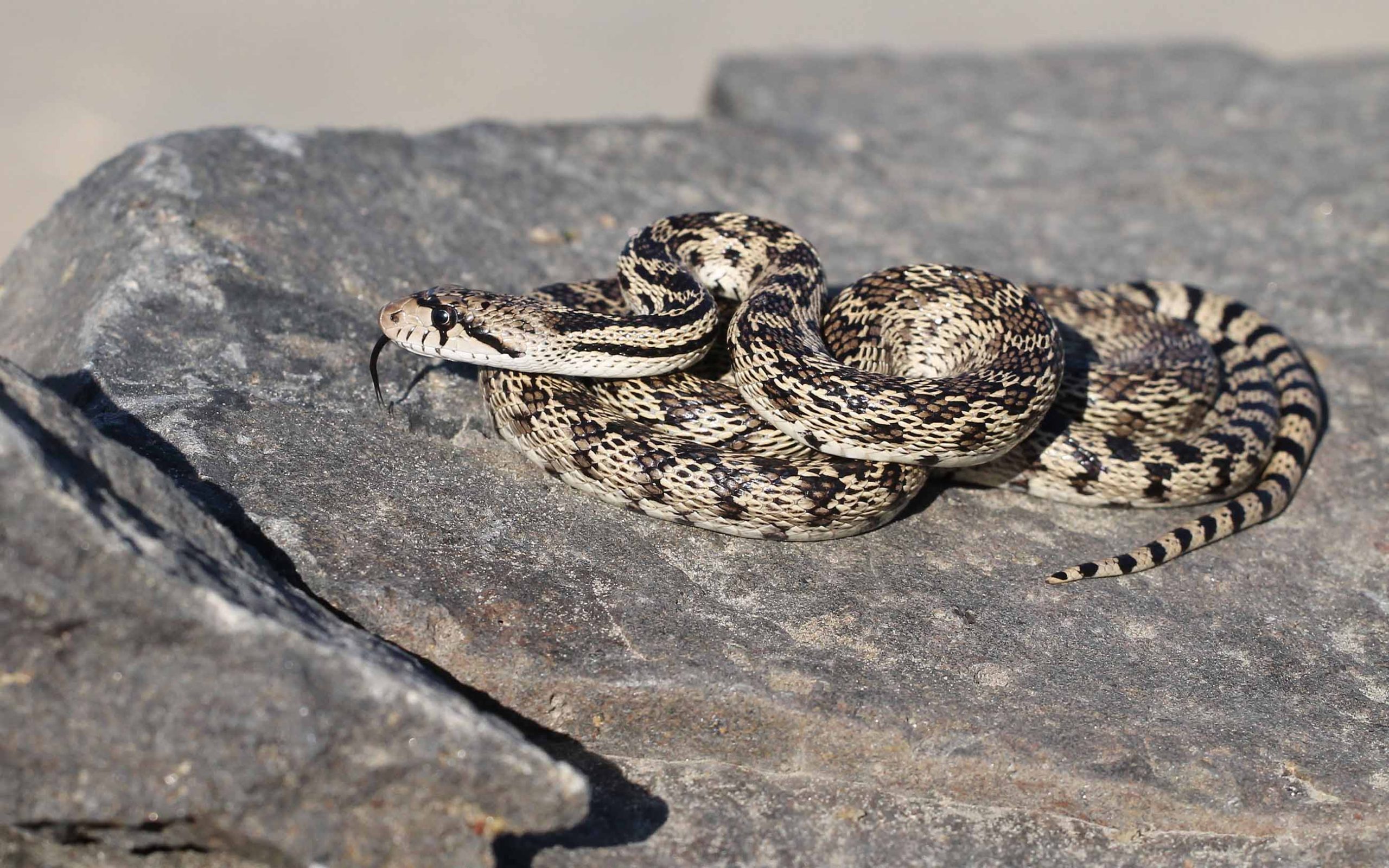
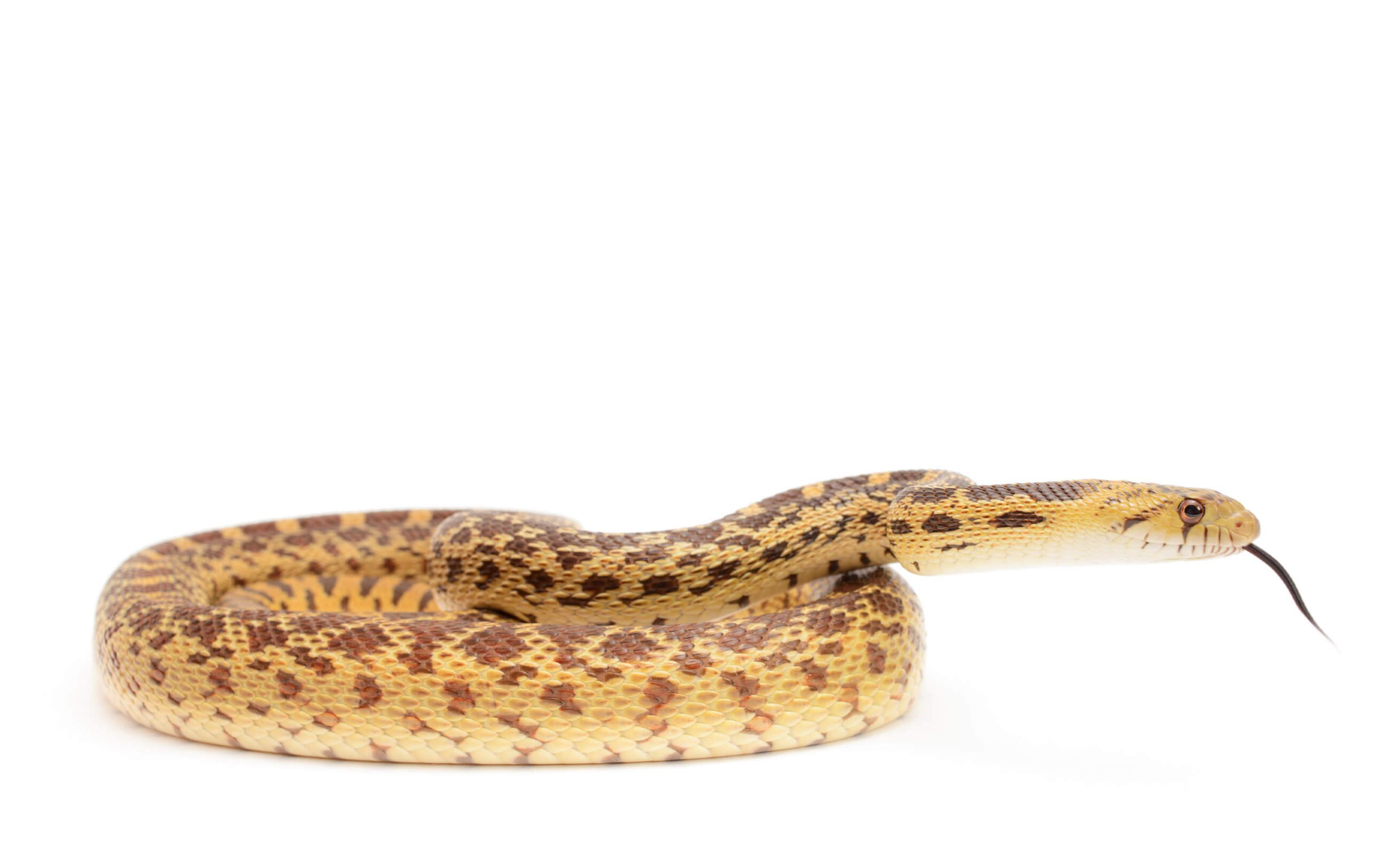
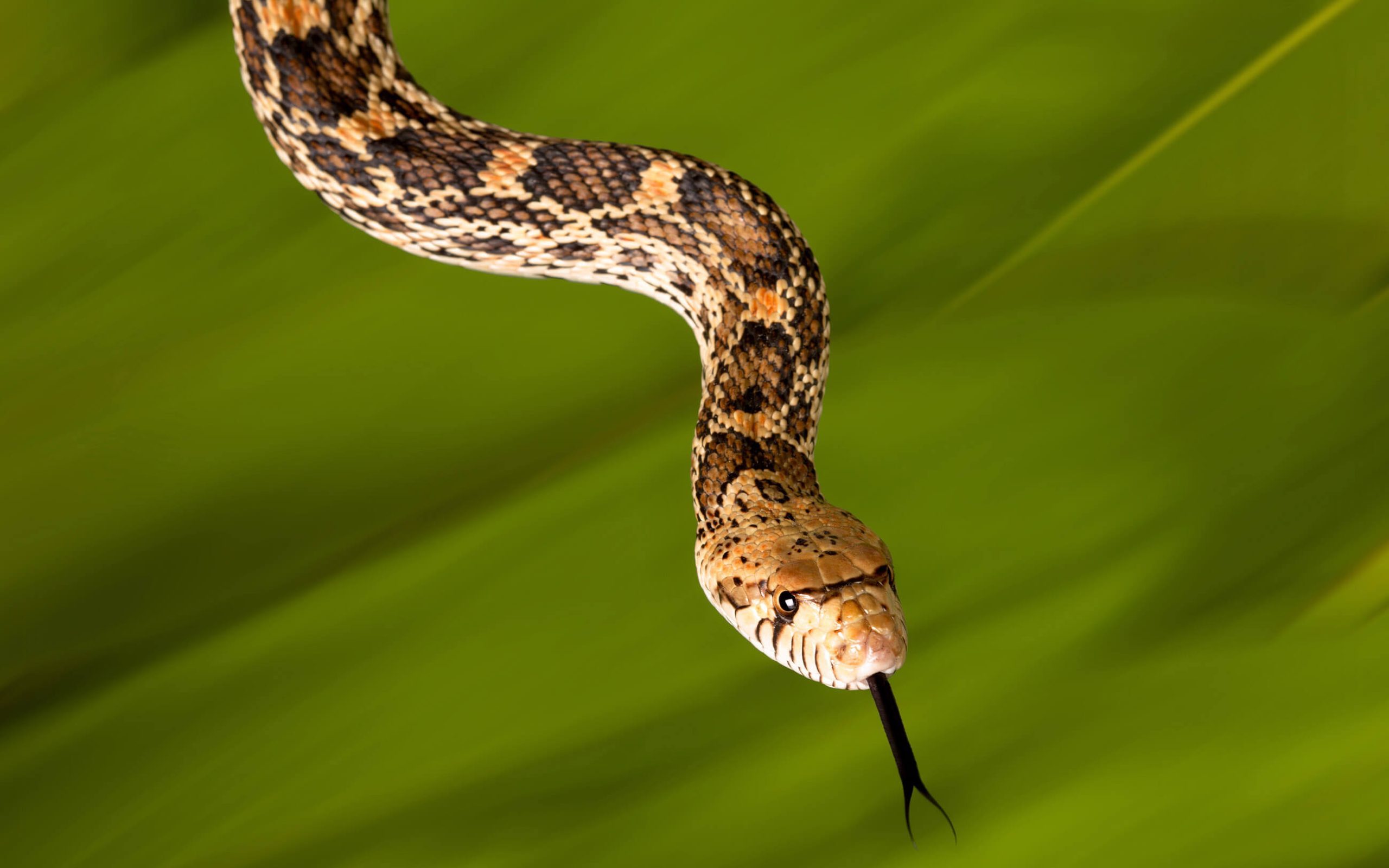
Bullsnake Pituophis catenifer sayi
NON-VENOMOUSTHREAT 2/10
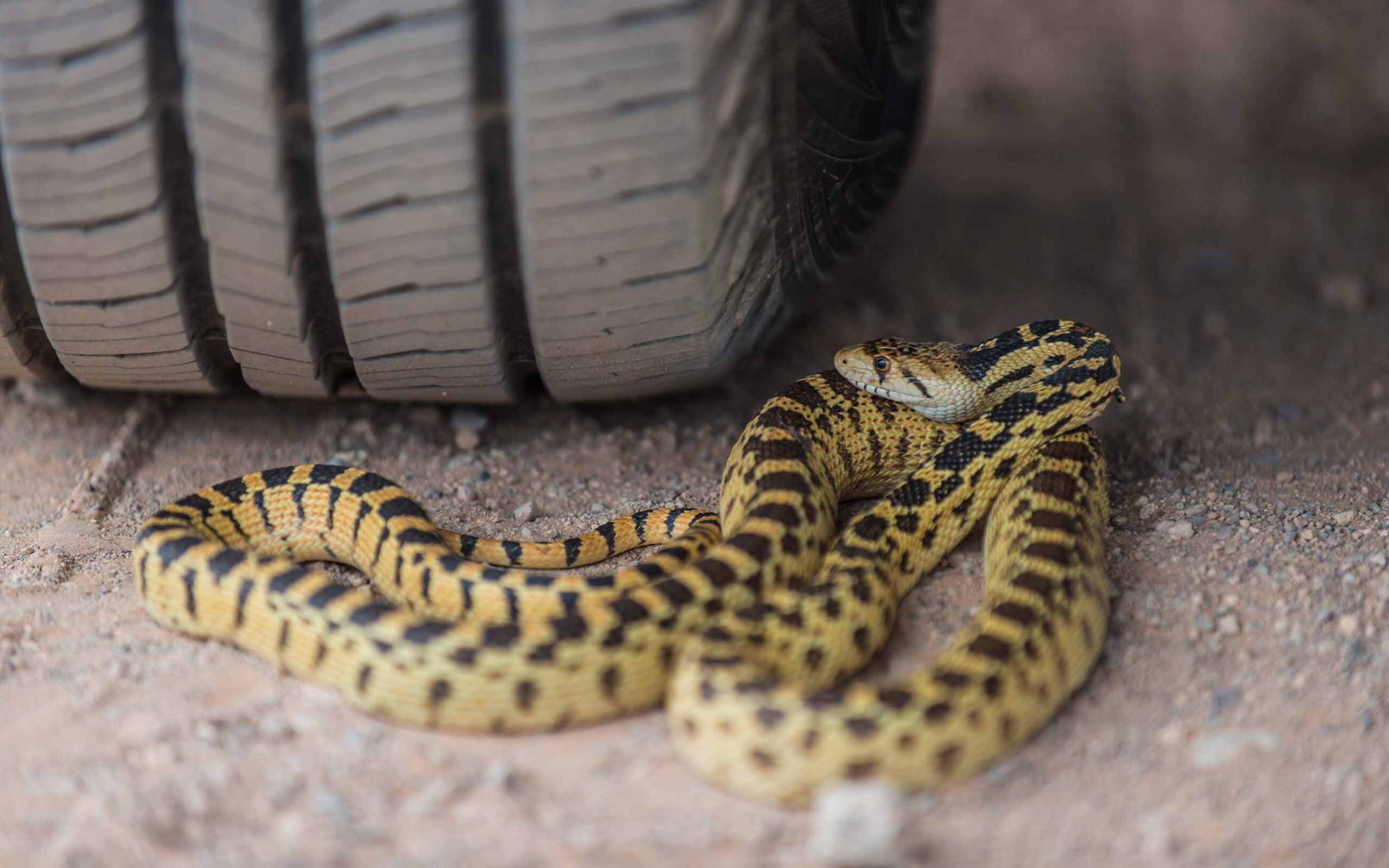
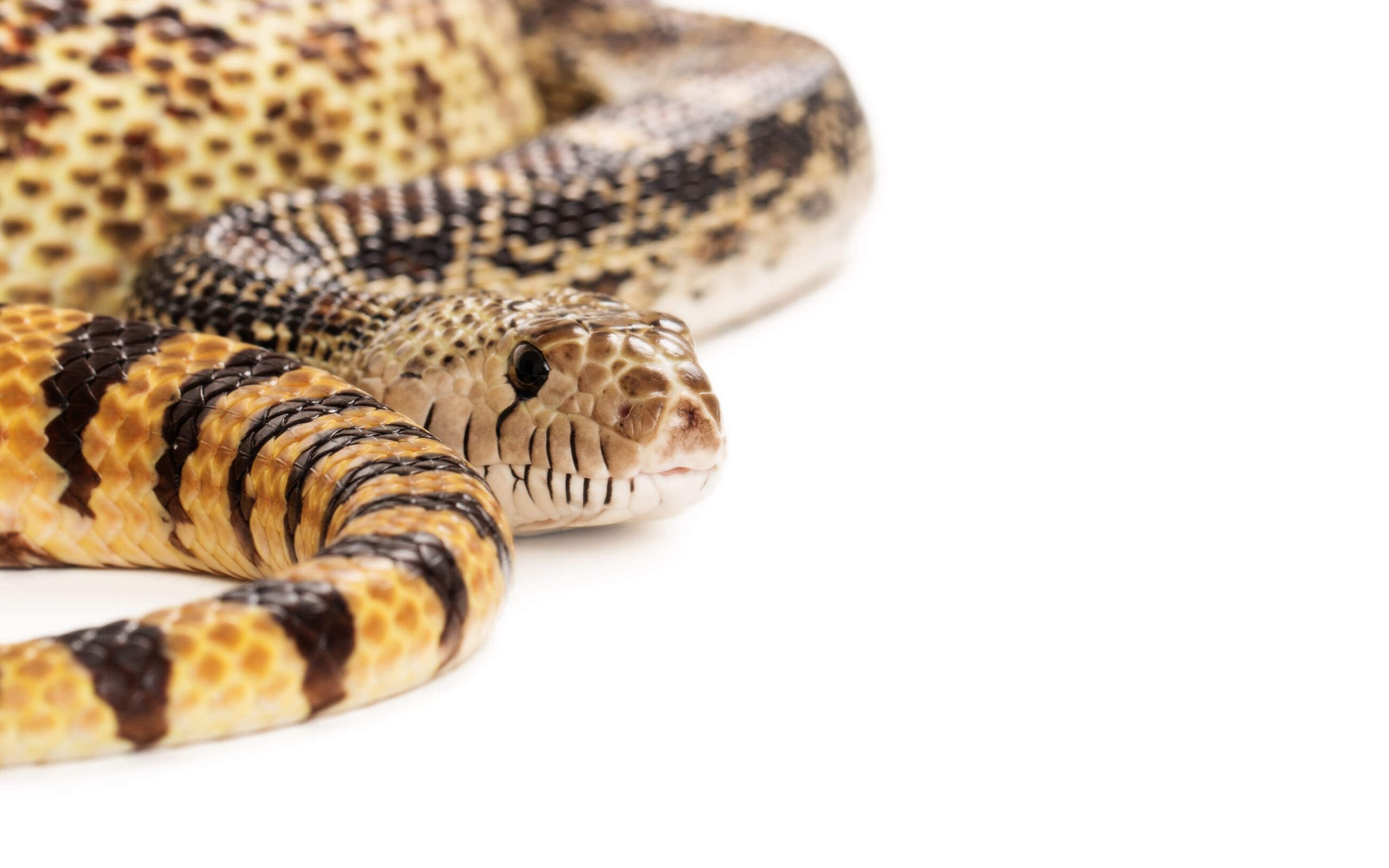
One of the largest snakes in Colorado and the one most often mistaken for a rattlesnake. A powerful, non-venomous constrictor that does far more good than harm, and a common sight on Front Range properties. Also called a gopher snake.
Identification
- Large and heavy bodied, often four to six feet, sometimes up to eight
- Yellow, cream, or tan with dark brown or black blotches down the back
- Pointed snout and a relatively small head, not a broad triangle
- No rattle, though it vibrates its pointed tail to fake one
- Round pupils, unlike a rattlesnake's vertical slits
Habitat
- Open grassland, fields, and brushy property edges
- Rodent burrows, which it follows and takes over
- Rock piles, woodpiles, and foundation gaps near the house
- Gardens and outbuildings where mice and rats are active
Behavior
Bullsnakes are excellent rodent hunters, killing by constriction, and a single one keeps a remarkable number of mice and rats in check. Threatened, it puts on a dramatic show: hissing loudly, flattening its head, coiling, and buzzing its tail to imitate a rattlesnake. It is all bluff. Bullsnakes are also known to kill and eat rattlesnakes, so one on the property can mean fewer venomous snakes.
Danger & What to Do
Non-venomous and not a medical threat. A cornered bullsnake can give a defensive bite that might bleed a little, but there is no venom involved. Because they look and act so much like rattlesnakes, the real danger is panic and misidentification. Give one space and let it move on, or have it relocated. Killing bullsnakes is counterproductive, since they suppress both rodents and rattlesnakes.
Garter Snake Thamnophis
NON-VENOMOUSTHREAT 1/10
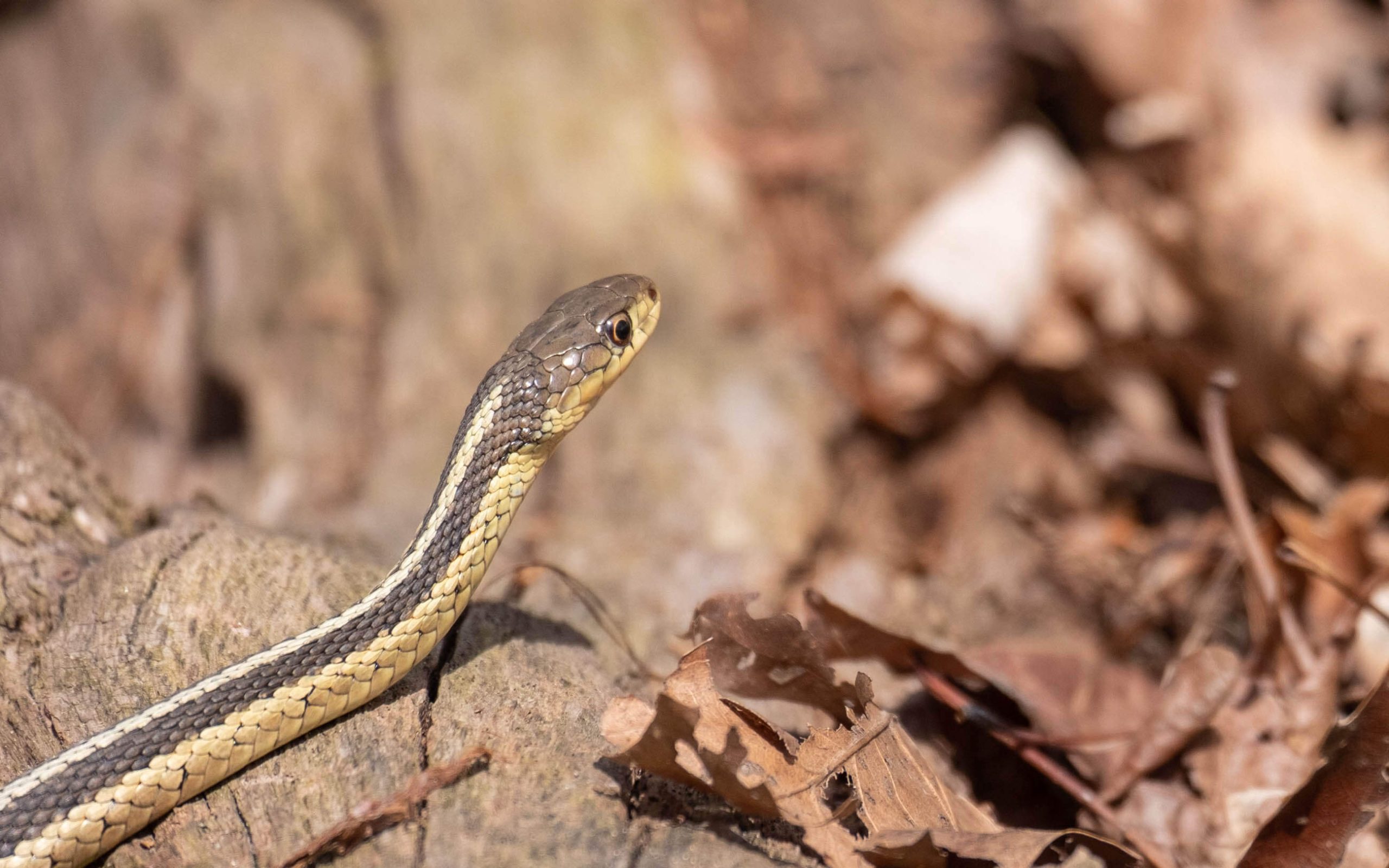
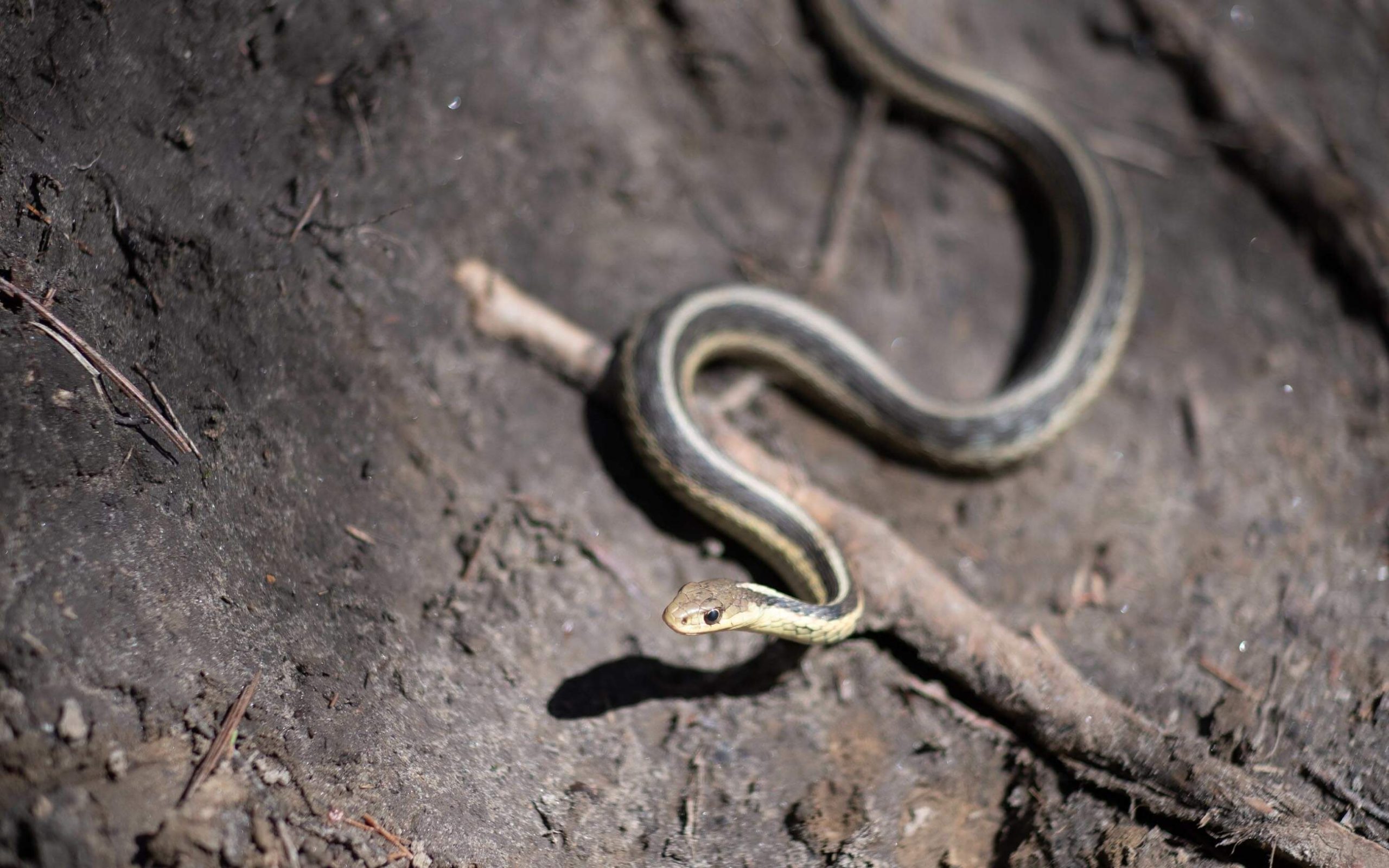
The snake Coloradans see most often: small, harmless, and striped, turning up in gardens, near water, and under cover around the yard. Protected under Colorado law and one of the most beneficial snakes you can have around.
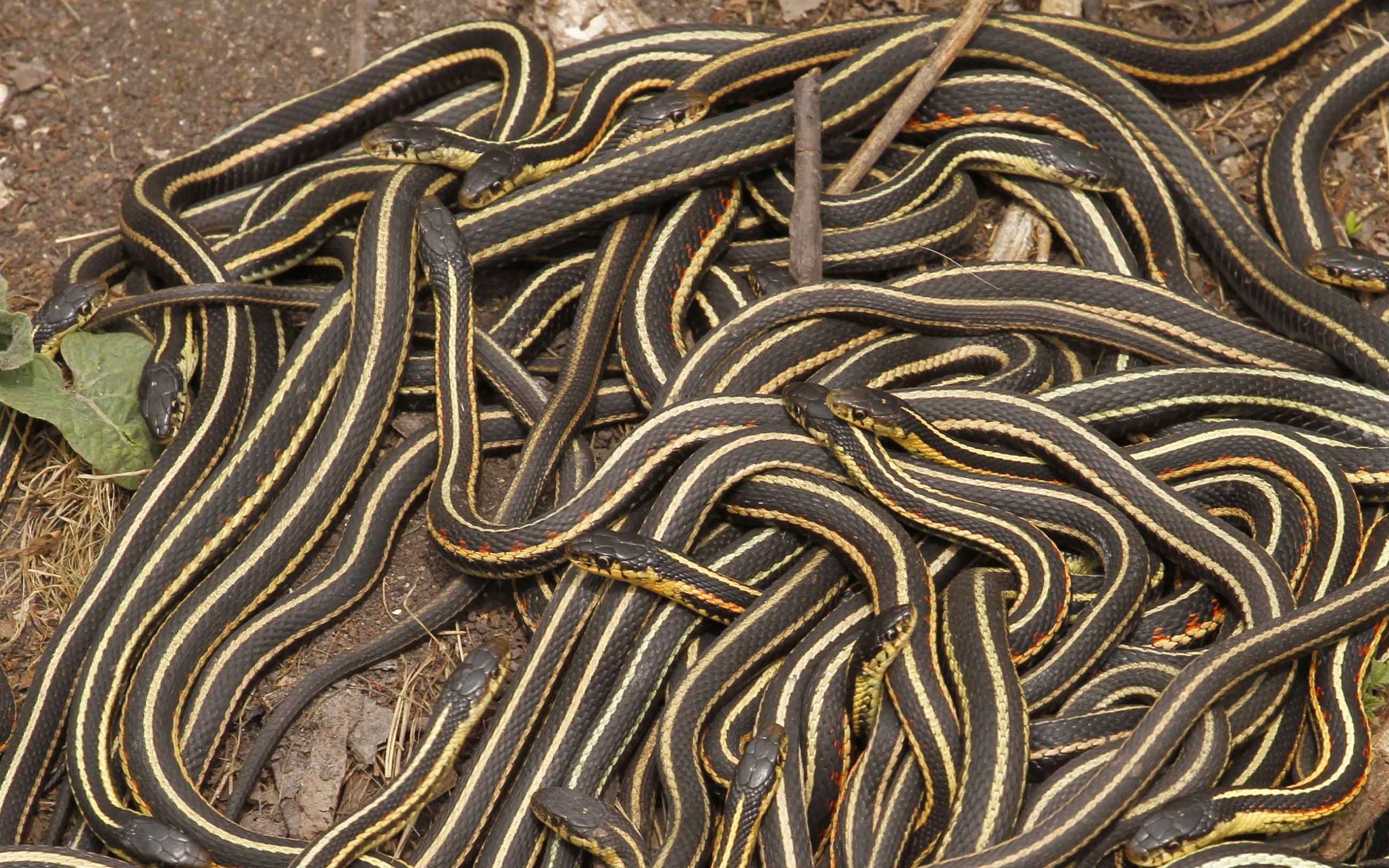
Identification
- Slender, typically eighteen to twenty-six inches
- Three light stripes down a darker body, usually yellow, green, or tan
- A slightly rough, non-glossy look from ridged scales
- Small head only a little wider than the neck
- No rattle, round pupils
Habitat
- Damp areas near ponds, streams, ditches, and watered beds
- Tall grass, gardens, and ground cover
- Under rocks, logs, boards, and debris
- Shared underground dens in winter, where many gather to hibernate
Behavior
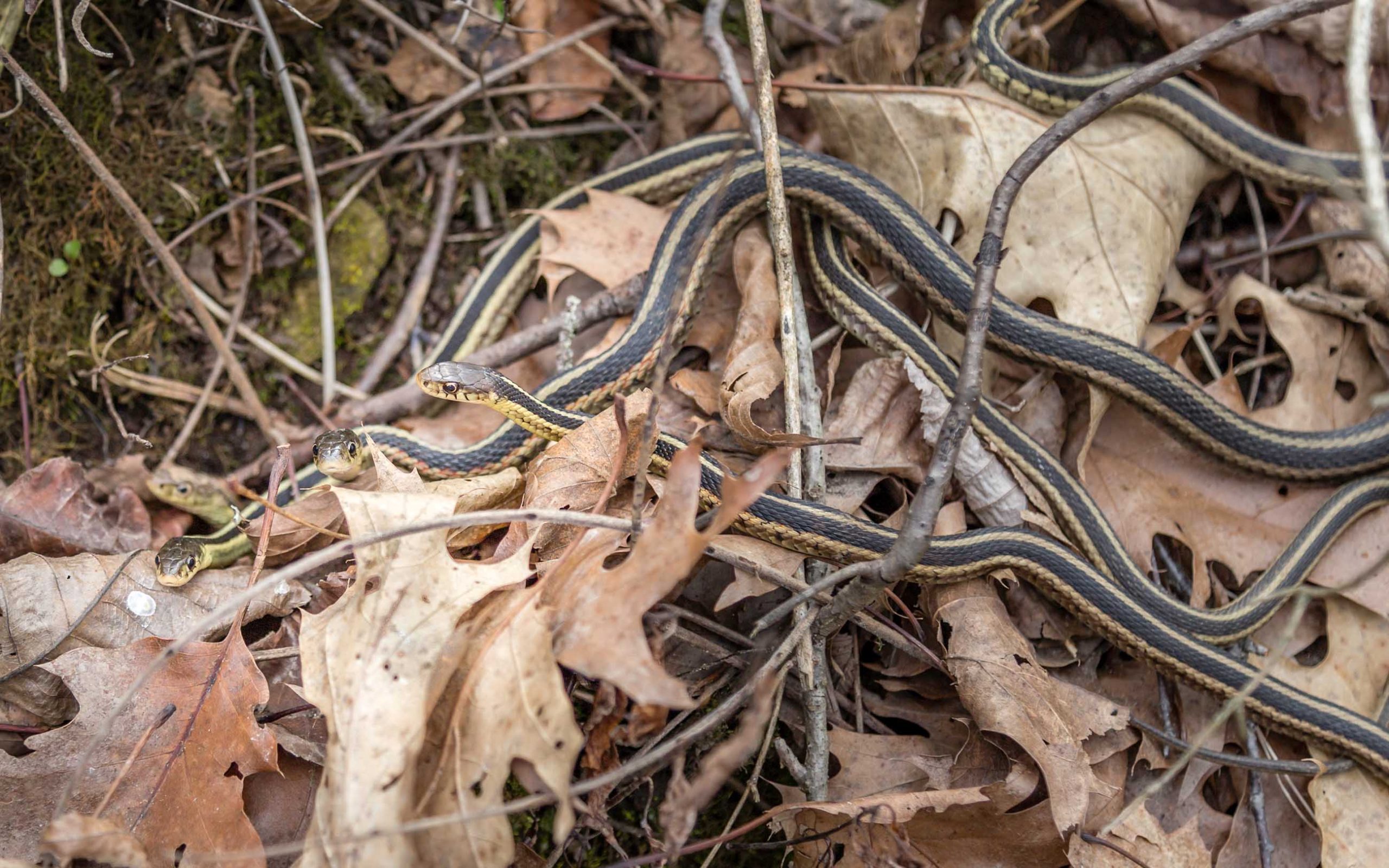
Garter snakes are active by day and hunt earthworms, slugs, insects, small fish, and rodents. They flee readily and are rarely aggressive. Grabbed, a garter may release a harmless, foul-smelling musk and occasionally a tiny bite. In fall they congregate at communal dens to overwinter, which is the source of many nest of snakes sightings.
Danger & What to Do
Effectively harmless. Garter snakes produce a very mild saliva toxin that helps subdue prey like worms, but it has no meaningful effect on people beyond, very rarely, slight itching at a bite. They are protected under Colorado law and cannot legally be killed. Leave them be, since they quietly control garden pests, or have one relocated if it turns up somewhere unwelcome.
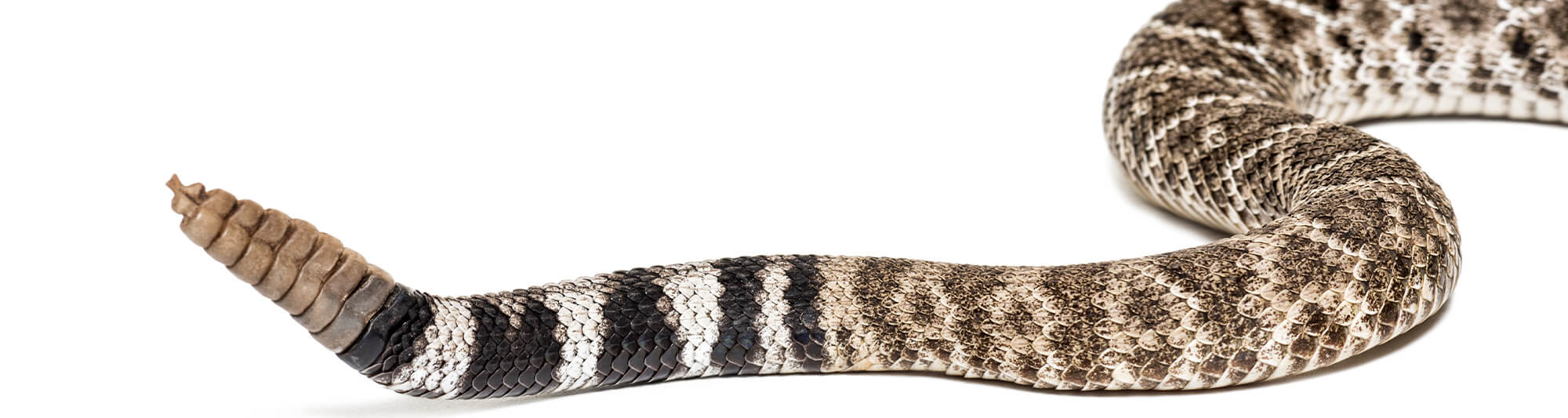
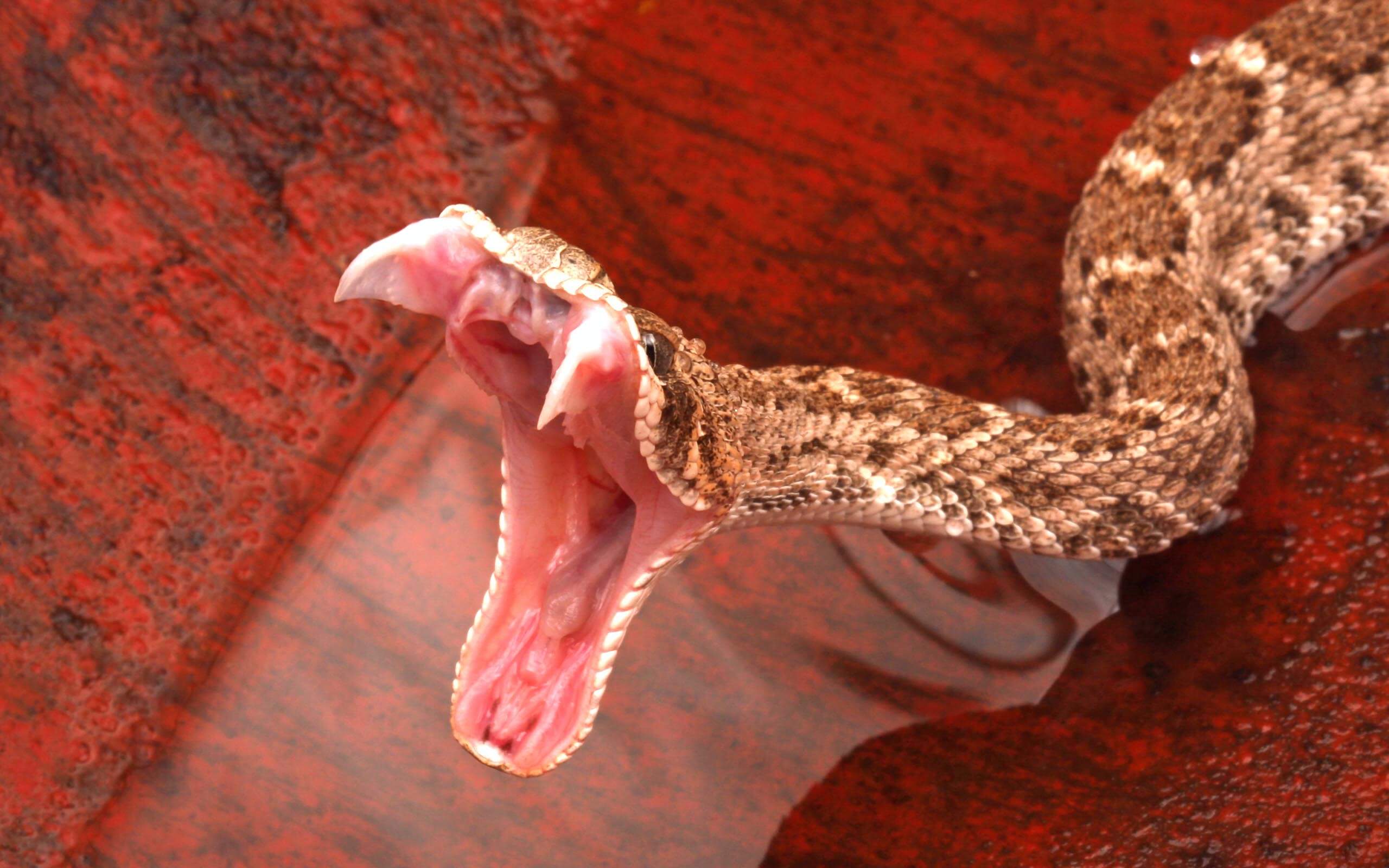
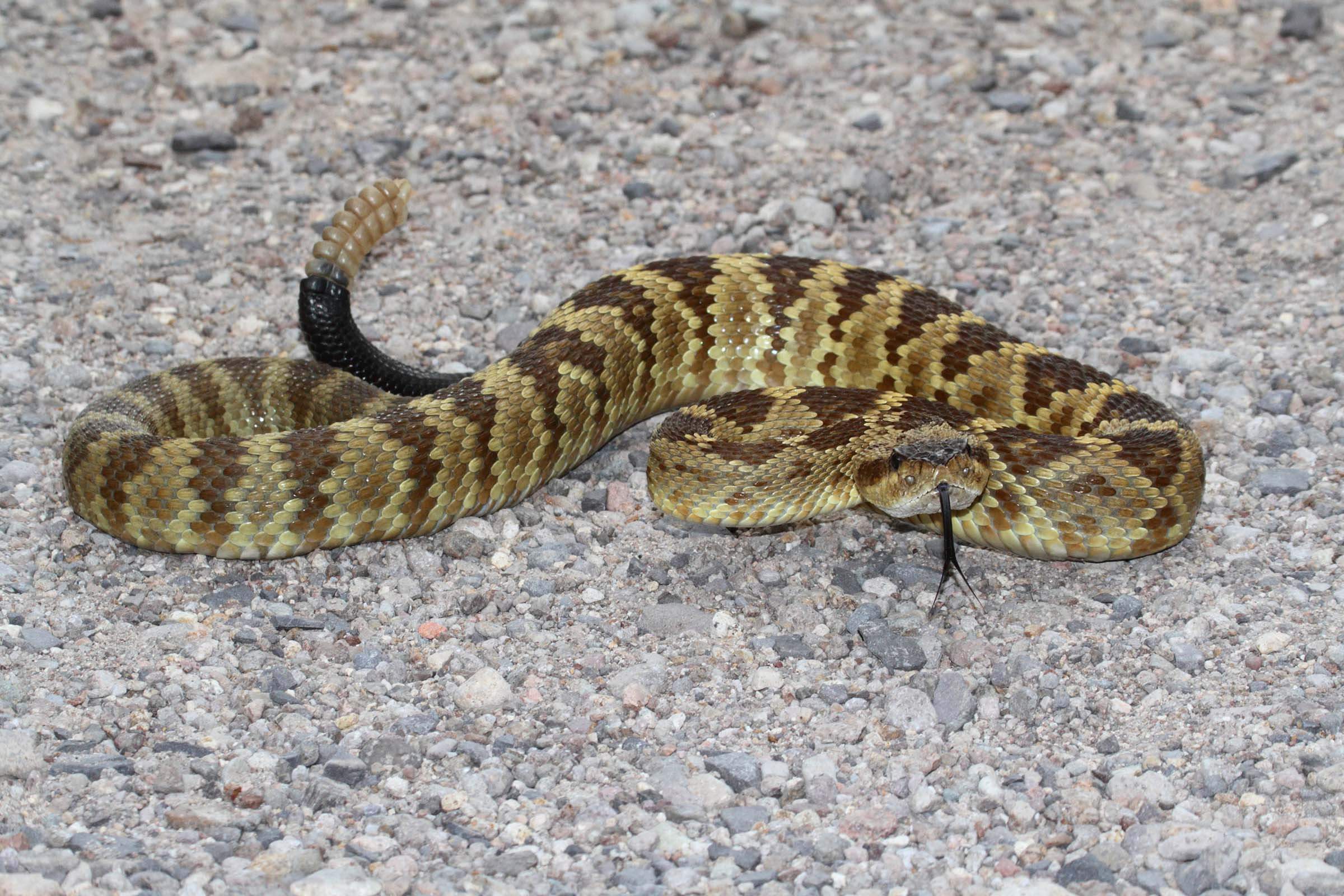
Western Rattlesnake Crotalus viridis
VENOMOUSTHREAT 9/10
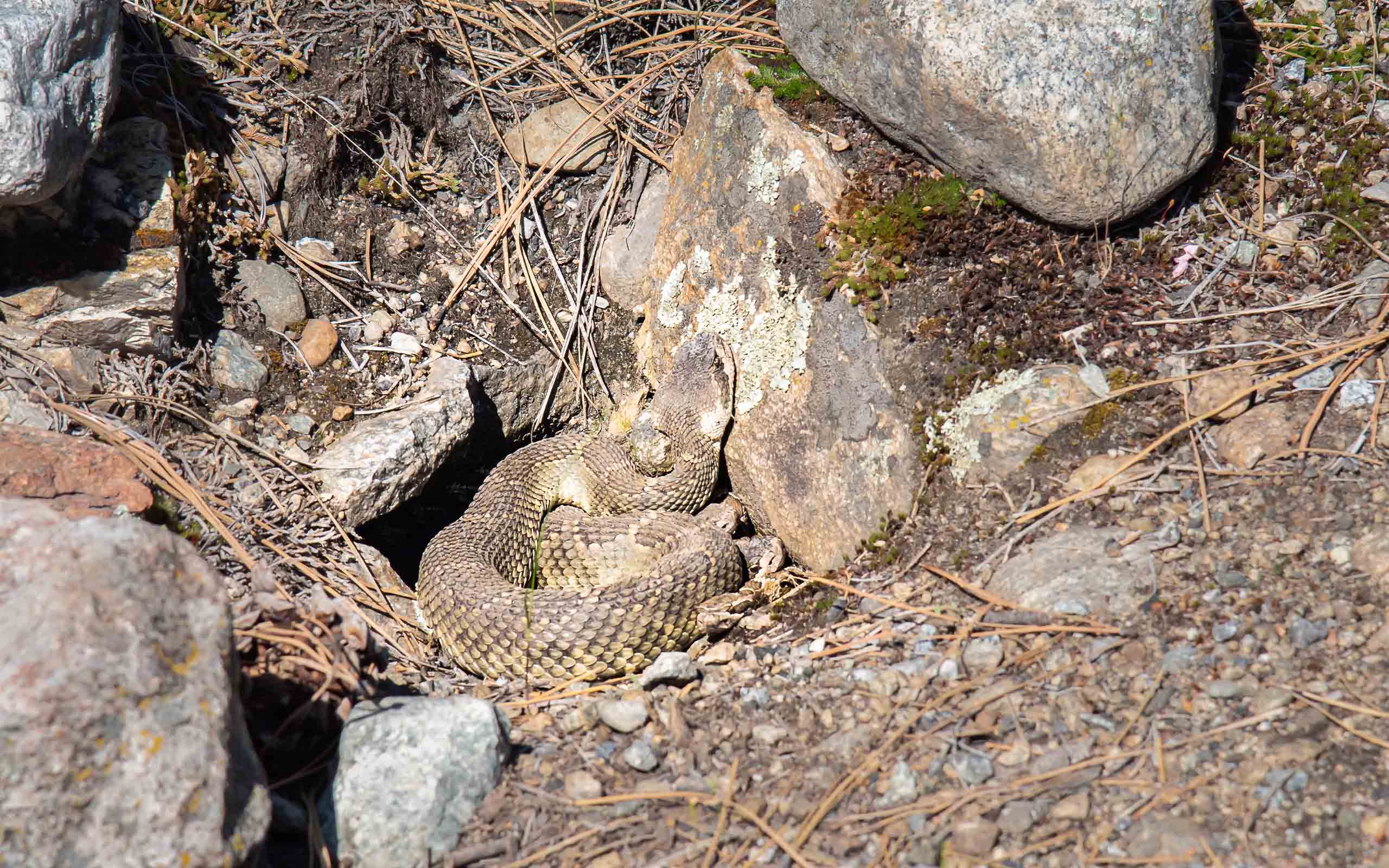
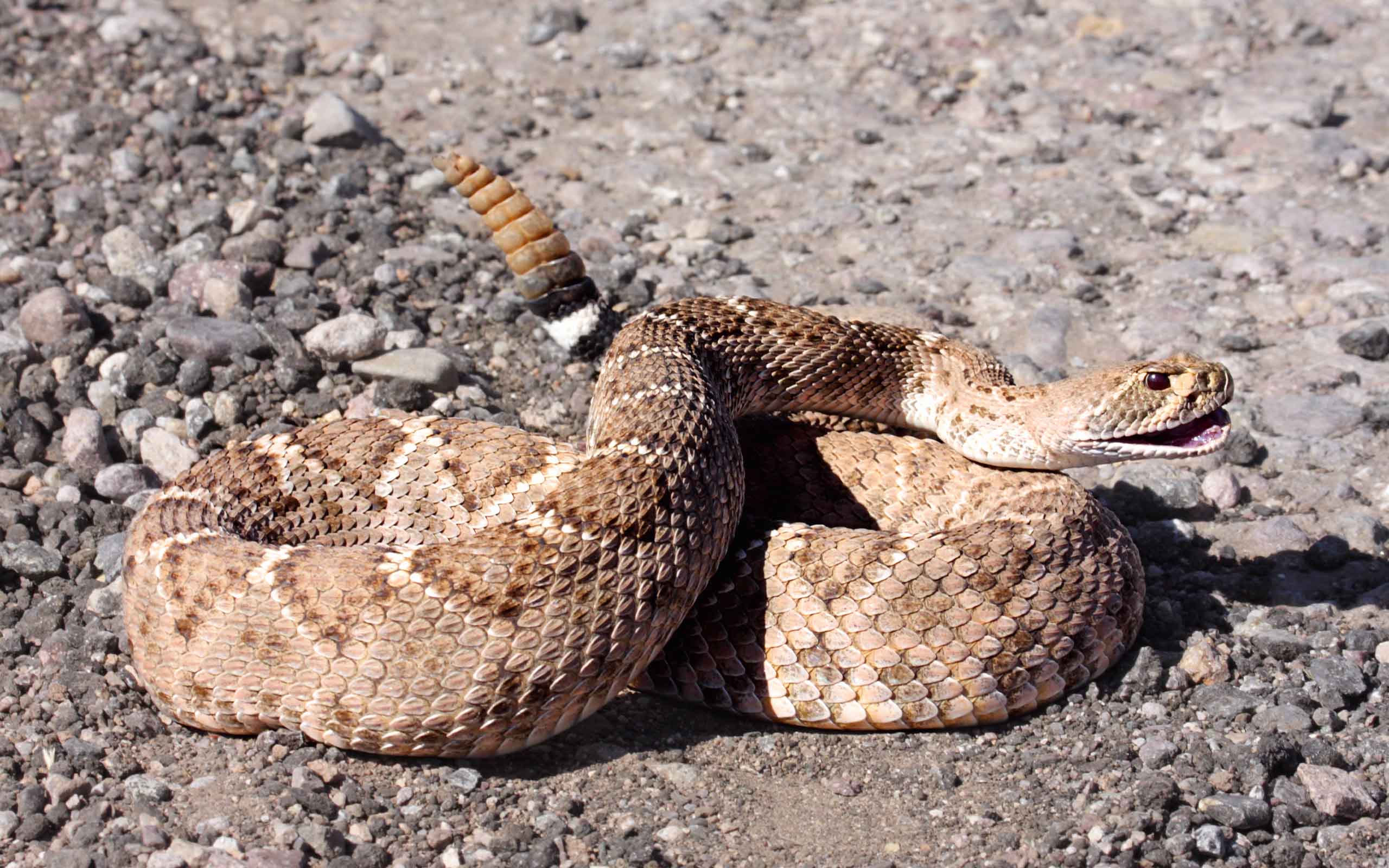
Colorado's most widespread venomous snake and the one to take seriously. A pit viper whose bite is a genuine medical emergency. Most encounters happen on warm-season hikes and on properties backing up to open space.
Identification
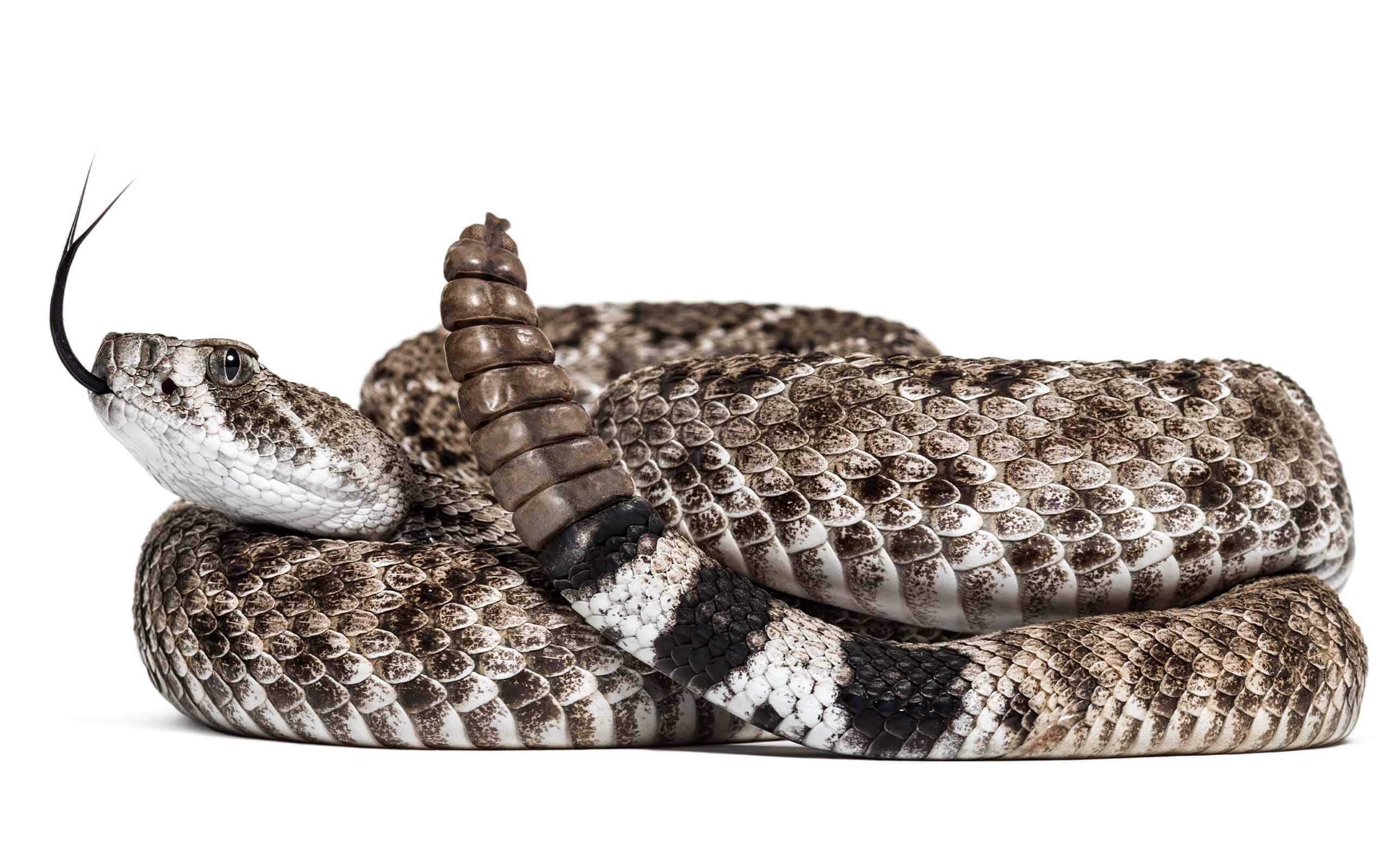
- Heavy, thick body, usually three to four feet
- Tan, brown, or greenish-gray with dark, light-edged blotches
- Broad triangular head clearly wider than the neck
- A segmented rattle at the end of the tail
- Vertical, cat-like pupils and heat-sensing pits by the nostrils
Habitat
- Open prairie, grassland, and rocky hillsides
- Property edges bordering fields or open space
- Rock outcrops, ledges, and south-facing slopes for basking
- Rodent burrows and shaded cover during the heat of the day
Behavior
Prairie rattlesnakes are most active spring through fall and hunt rodents with their heat-sensing pits. They would rather avoid people and usually rattle a warning, but a startled or cornered snake will strike with little notice. They bear live young, a dozen or more, in late summer, and retreat to communal dens in the cold months.
Danger & What to Do
Venomous and dangerous. The venom damages tissue and affects blood and clotting, and a bite brings intense pain and swelling and can be life-threatening without prompt care. Dogs are at especially high risk because they investigate with their nose. If you meet one: stop, keep well back, keep pets and children away, and give it a clear path to leave. Never try to handle or kill it, since most bites happen during those attempts. Call a professional to relocate one from an occupied property, and treat any bite as an emergency.
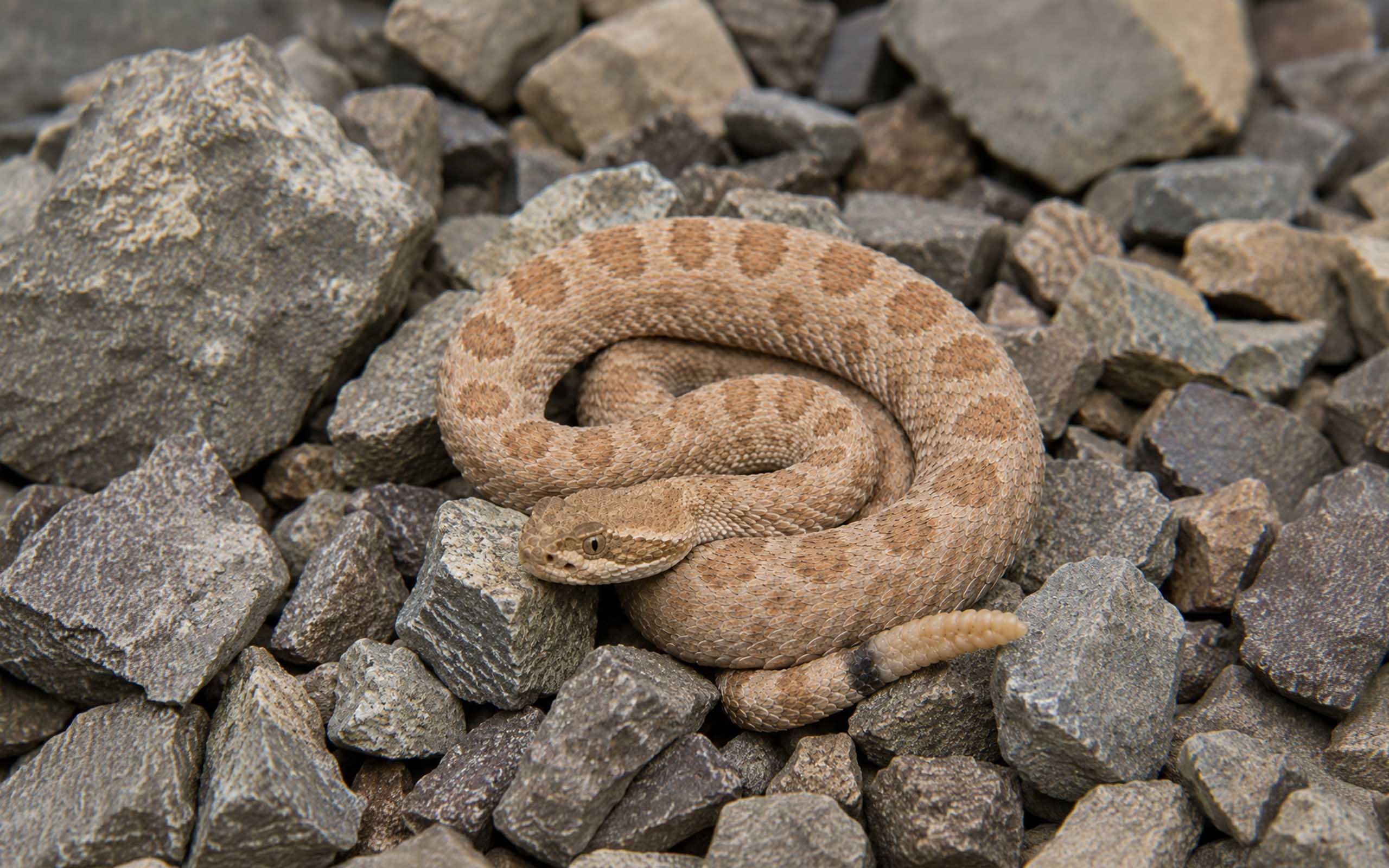
Midget Faded Rattlesnake Crotalus oreganus concolor
VENOMOUSTHREAT 8/10
A small, pale rattlesnake of western Colorado's canyon country. Its modest size is deceptive: drop for drop, its venom is among the most potent of any North American rattlesnake.
Identification
- Small for a rattlesnake, usually under two feet
- Pale, washed-out cream, tan, yellowish, or light gray with faint blotches
- Broad triangular head and a small rattle
- Vertical pupils and heat-sensing pits
Habitat
- Rocky canyons, ledges, and outcrops, mainly in western Colorado
- Crevices and talus where it shelters and dens
- Sun-warmed rock in cool hours, shade during heat
Behavior
Secretive and often active at dusk and after dark, especially in hot weather. It feeds on lizards and small rodents. Like other rattlesnakes it prefers to avoid confrontation and will rattle if cornered, but its small size and pale color make it easy to overlook.
Danger & What to Do
Venomous, with disproportionately potent venom for its size, so a bite is a serious medical emergency despite the small frame. Treat it exactly as you would any rattlesnake: keep your distance, keep pets and people back, do not attempt to handle or kill it, and call a professional to relocate one found on an occupied property. Seek immediate medical care for any bite.

SNAKE NESTS
What a Snake Nest Actually Is
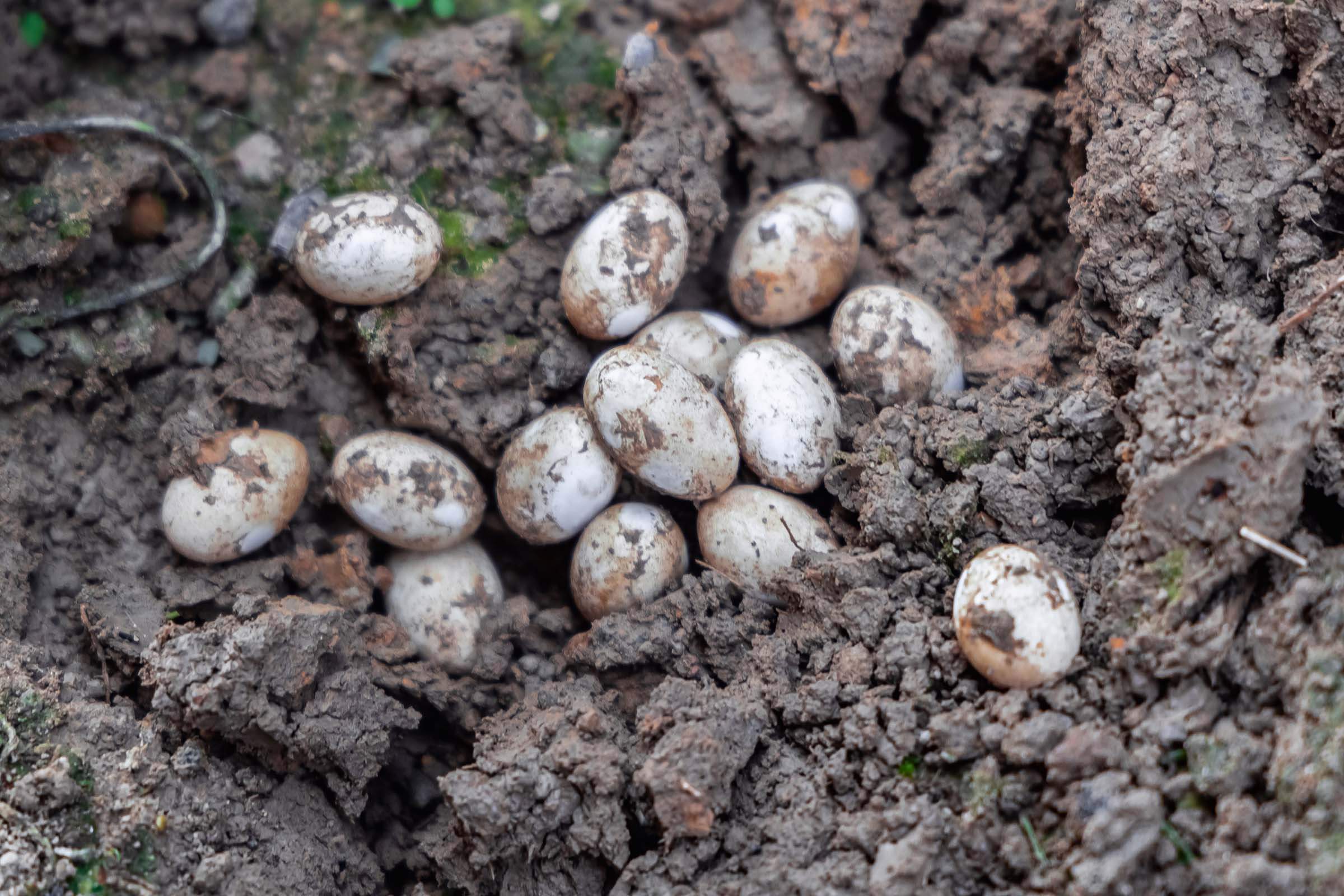
The phrase snake nest conjures a writhing ball of snakes, but that is not how snakes live. Snakes are solitary. They do not form colonies, and they do not build nests the way birds do. What people call a snake nest is usually one of a few different things, and most of them are nothing to fear.
When a female is ready to lay, she finds a sheltered spot, an existing burrow or a gap under rock or debris, and leaves the eggs there, usually unattended. A cluster of snakes seen together in spring is more often a mating event, and a group sharing a spot over winter is a hibernaculum, a shared den. Garter snakes in particular gather to hibernate, then scatter as it warms.
Snakes Are Solitary
They do not live in groups or raise young together. A permanent nest full of snakes is almost always a misread of something else.
Nest vs. Snake Ball
A knot of snakes in spring is usually males competing to breed with one female, not a nest. It breaks up within hours or days.
What a Nest Really Is
Eggs tucked into an existing crevice, burrow, or debris pile and left unattended. No structure is built; the snake just uses what is already there.
Winter Dens
Many snakes, garters especially, share an underground den to hibernate, then emerge together in spring, which people often mistake for a nest.
PEST THREAT LEVEL
9/10
RATTLESNAKES
Some Colorado Snakes Are Dangerous
Most snakes you see are harmless and best left alone to move on. The exception is the rattlesnakes. Colorado's venomous snakes are the prairie and western rattlesnake and the smaller midget faded rattlesnake, and a bite is a genuine medical emergency. They will usually warn you with a rattle and would rather retreat than strike, but a startled or cornered one will defend itself.
Dogs are especially at risk, since they investigate with their nose and a strike to the face can be deadly. The safe rule with any snake you cannot confidently identify is simple: keep your distance, keep pets and kids back, and do not try to handle or kill it. Give it room and it will usually leave on its own, or call a professional to relocate it.

Rattlesnakes Are Venomous
A bite is a medical emergency
Dogs Are at High Risk
A strike to the face can be deadly
Do Not Handle or Provoke
Most bites come from trying
When in Doubt, Back Off
Give it room, call a pro
FREQUENTLY ASKED
Common Snake Questions
The questions that come up most about Colorado snakes. Straight answers.
Do snakes really nest together?
Not really. Snakes are solitary and do not build nests or live in colonies. What looks like a nest is usually unattended eggs in an existing crevice, a springtime mating cluster that breaks up quickly, or a shared winter den. Garter snakes in particular pile into a hibernaculum to overwinter and emerge together in spring.
How can I tell if a snake is venomous?
In Colorado, the venomous snakes are the rattlesnakes. Look for a rattle on the tail, a heavy body, and a broad triangular head. Harmless snakes like bullsnakes and garters have slimmer heads and no rattle, though a bullsnake will fake the rattle by buzzing its tail. If you cannot tell, treat it as dangerous and keep back.
Are bullsnakes dangerous?
No. Bullsnakes are non-venomous and harmless to people. They put on a convincing act, hissing, flattening, and vibrating the tail to mimic a rattlesnake, but it is a bluff. They are genuinely helpful, preying on rodents and even rattlesnakes. They can alarm pets, but they are not a real threat.
Is it legal to kill snakes in Colorado?
Generally you should not, and some are specifically protected. Garter snakes, for instance, are protected under Colorado law, so it is illegal to kill or harm them. The safer move with any snake is to leave it alone or have it relocated rather than trying to kill it, which is also when most bites happen.
What attracts snakes to my yard?
Food and shelter. Rodents are the big draw, so a mouse or rat problem brings snakes. Tall grass, woodpiles, rock piles, and clutter give them cover, and cool, damp spots give them somewhere to rest. Clear the cover, keep rodents down, and seal gaps, and a yard becomes far less inviting.
Snake on Your Property?
If there is a snake on your property and you cannot identify it, or you think it might be a rattlesnake, do not try to handle it. Keep people and pets back and get a professional to identify and relocate it safely.
We have served the Castle Rock area for over 13 years. Reach out and we will point you to the right help for a snake situation.
Call 720-583-4126 or contact us online to get started.
More Pest Protection.
More Peace of Mind.